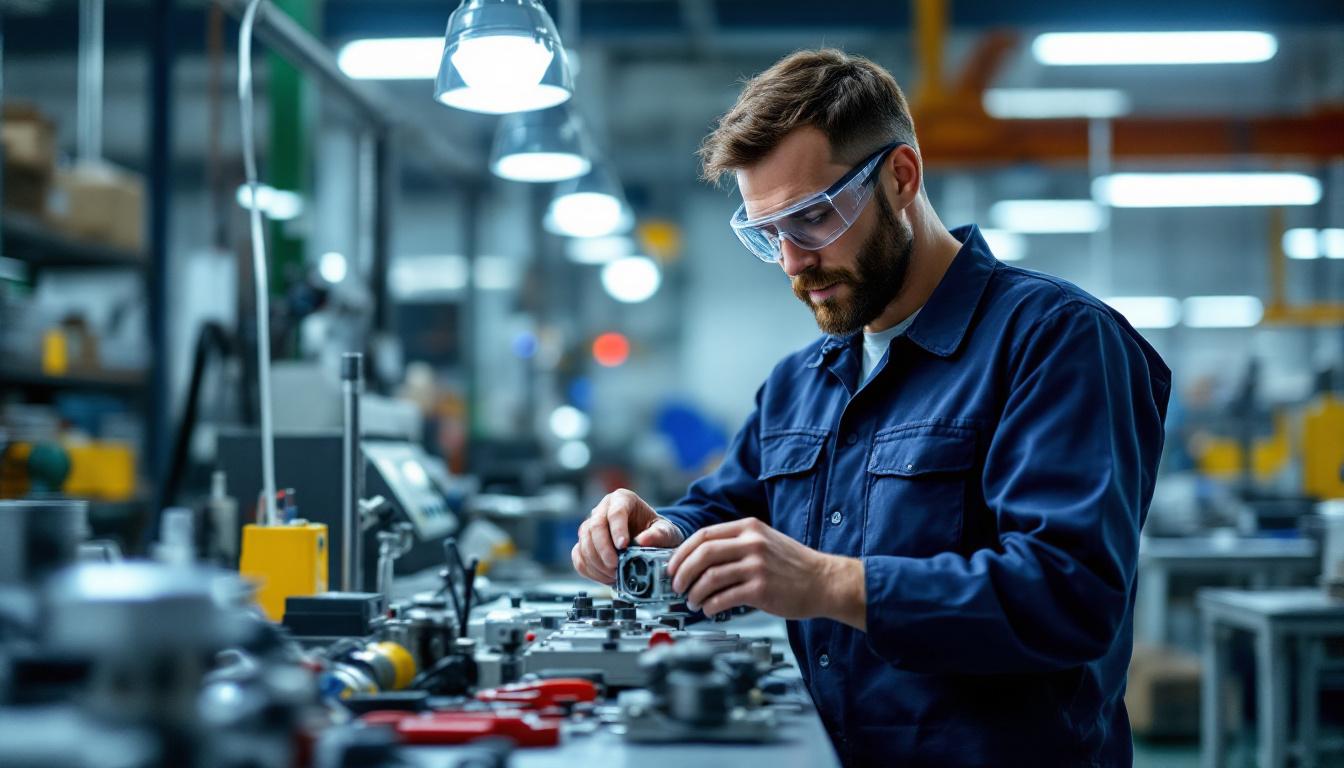
Welder
Perform precise welding tasks on components to ensure quality, integrity, and compliance with blueprints and safety regulations.
About
As a Welder in a large manufacturing company, you'll play a crucial role in ensuring the quality and integrity of welded components. Your work directly impacts product reliability and operational safety. The position involves collaborating with engineering teams, using specialized welding tools, and following strict safety regulations to meet production deadlines. The welder must be adept in reading blueprints and capable of performing under pressure while maintaining high standards of workmanship.
Skills
Technical skills
- Mastery of TIG welding for precision tasks
- Proficient in MIG welding for diverse applications
- Skilled in blueprint reading to guide accurate work
- Understanding of material science for informed decisions
- Familiar with quality assurance protocols for top results
- Experience with ERP software for data management
- Knowledge of welding safety standards to maintain compliance
- Capable of operating punch press machines effectively
- Expertise in advanced fabrication techniques
Interpersonal skills
- Exhibits strong attention to detail consistently
- Demonstrates effective problem-solving abilities
- Possesses strong communication skills for team interaction
- Maintains a team-oriented mindset for collaborative success
- Shows adaptability to change in dynamic settings
- Carries a sense of responsibility in all tasks
- Exemplifies punctuality in meeting deadlines
Tasks
- Perform welding tasks using TIG and MIG techniques to meet production targets. Read and interpret blueprints and technical drawings to ensure precise welds. Inspect welds for quality, checking for strength and integrity against defined metrics. Coordinate with the quality assurance team to address weld defects promptly. Maintain all equipment and tools ensuring compliance with safety regulations. Record production data in ERP systems for operational reporting. Collaborate with project managers to adjust welding plans based on project constraints. Ensure compliance with industry safety standards and company protocols. Train junior welders on advanced techniques and proper tool usage. Optimize welding processes to reduce material waste and improve efficiency.
Work environments
Work environments for professionals in this sector may vary:
Career paths
- Progress to Senior Welder with increased responsibilities
- Advance to Welding Supervisor overseeing team operations
- Transition to a role as Quality Control Inspector ensuring standards
- Move up to Fabrication Manager leading complex projects
- Become a Project Manager coordinating welding initiatives
- Develop into a Training Coordinator mentoring new welders
Profile sought
Entering the profession
Entry is generally through vocational training or apprenticeships; prior experience in metalwork can be advantageous.
Training — United States
Welder training typically involves high school completion followed by vocational courses or apprenticeships focusing on welding techniques and safety.
The job market — United States
The welding job market is stable with consistent demand in manufacturing and construction sectors, though some automation may impact certain tasks.
FAQ
How to train for this job
Programmes suggested by Ulydia to enter this profession.