Certificate in Biology/Biotechnology Technologies/Technicians
This certificate teaches practical skills in biology and biotechnology, preparing students for technician roles in labs and related industries in under two years.
About
The Certificate in Biology/Biotechnology Technologies/Technicians is a postsecondary program in the United States designed for students interested in working in biological and biotechnological fields. It targets those who want to gain hands-on technical skills without committing to a full degree. This certificate prepares learners to become laboratory technicians or assistants, supporting scientific research and industrial processes in biology and biotechnology. It is suitable for students who have completed high school and want a focused, practical education that leads quickly to employment in technical roles.
- The program typically lasts under two years, offering a concise path to technical expertise.
- It focuses on developing skills for roles such as biological technician or biotechnology technician.
- The training combines theoretical knowledge with practical lab work to prepare students for real-world tasks.
- It is aimed at students who want to enter the workforce quickly or enhance their qualifications for related jobs.
- The certificate is recognized in the US education system as an EQF level 4 qualification, corresponding to technical competence.
What you study
The curriculum covers essential biology and biotechnology topics, emphasizing practical lab skills and technical knowledge. Students start with foundational courses and progress to more specialized subjects. The program balances theory with hands-on experience to build confidence in laboratory environments.
- Early courses include general biology and laboratory safety to establish basic scientific understanding.
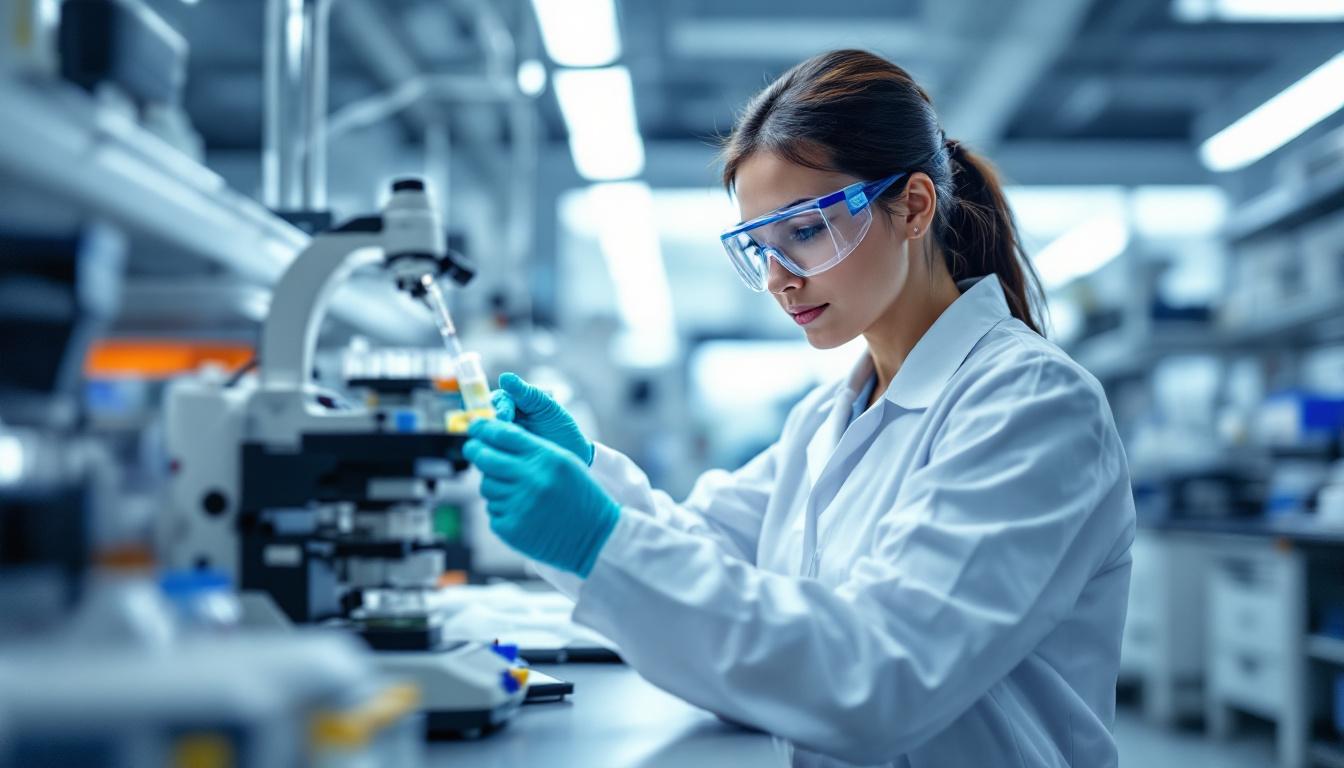
- Students learn about biotechnology techniques such as DNA extraction, cell culture, and microscopy.
- There is significant focus on laboratory equipment use and maintaining accurate records.
- Practical sessions and experiments form a large part of the training, allowing students to apply concepts directly.
- Some programs may include training in data analysis and quality control relevant to biotech industries.
- The progression moves from general principles to specific technical skills needed in biological labs.
How to get in
Admission to this certificate program generally requires a high school diploma or equivalent in the US. The process is straightforward and accessible to students who have completed secondary education. Applicants should demonstrate interest and basic skills in science.
- Most institutions require a high school diploma or GED for entry.
- Some programs may ask for placement tests in math or science to assess readiness.
- Applicants typically submit an application form and transcripts from previous education.
- The program is open to students with various academic backgrounds but favors those with a science interest.
- It is designed to be accessible and provide opportunities for students aiming for technical careers.
Day to day
The academic year involves a mix of classroom lessons and lab work, giving students regular practical experience. Students often work on projects that simulate real lab tasks. Some programs may offer internships or cooperative education opportunities.
- Students attend lectures on biology principles and biotechnology methods several times a week.
- Laboratory sessions are frequent, allowing hands-on practice with scientific equipment.
- Projects may include experiments like DNA analysis or microbial culturing to develop technical skills.
- Some programs encourage or require internships in biotech companies or research labs.
- The workload balances theory with practice, preparing students for the pace of technical jobs.
Careers after further study
These careers require a higher level of study than this degree.
Continuing your studies
After earning this certificate, students can continue their education in related fields to deepen their knowledge or aim for higher qualifications. Options include associate degrees or specialized training programs. The certificate can also serve as a foundation for career changes.
- Many graduates pursue an Associate Degree in Biotechnology or Biological Sciences to expand skills.
- Some choose to specialize further in areas like molecular biology or biomedical technology.
- The certificate can be a stepping stone to bachelor’s degree programs in life sciences.
- It also allows for reorientation into other technical or scientific fields with additional study.
Where to study this degree (118)





Liste des 118 établissements
- Laney CollegeOakland
- Westmoreland County Community CollegeYoungwood
- Jamestown Community CollegeJamestown
- Alcorn State UniversityAlcorn State
- Merrimack CollegeNorth Andover
- Pima Community CollegeTucson
- College of Saint MaryOmaha
- Ball State UniversityMuncie
- Johnson County Community CollegeOverland Park
- University of New HavenWest Haven
- Herkimer CollegeHerkimer
- Seminole State College of FloridaSanford
- Saint Louis UniversitySt Louis
- Austin Community CollegeAustin
- Middlesex Community CollegeBedford
- Montgomery CollegeRockville
- Shoreline Community CollegeShoreline
- Florida State College at JacksonvilleJacksonville
- Valencia CollegeOrlando
- Weber State UniversityOgden
- Pennsylvania State University-Main CampusUniversity Park
- St. Petersburg CollegeSt. Petersburg
- Quincy CollegeQuincy
- Bucks County Community CollegeNewtown
- Madison Area Technical CollegeMadison
- Fortis Institute-WayneWayne
- Davenport UniversityGrand Rapids
- Bluegrass Community and Technical CollegeLexington
- Collin CollegeMcKinney
- Montgomery County Community CollegeBlue Bell
- Lone Star CollegeThe Woodlands
- State College of Florida Manatee-SarasotaBradenton
- Hudson Valley Community CollegeTroy
- Salt Lake Community CollegeSalt Lake City
- Hillsborough Community CollegeTampa
- Saint Louis Community CollegeBridgeton
- Fox Valley Technical CollegeAppleton
- Northeast Wisconsin Technical CollegeGreen Bay
- Massachusetts Bay Community CollegeWellesley Hills
- Miami Dade CollegeMiami
- Frederick Community CollegeFrederick
- Bellevue CollegeBellevue
- Sinclair Community CollegeDayton
- Great Bay Community CollegePortsmouth
- Triton CollegeRiver Grove
- Athens Technical CollegeAthens
- Windward Community CollegeKaneohe
- Forsyth Technical Community CollegeWinston-Salem
- Blinn CollegeBrenham
- Del Mar CollegeCorpus Christi
- Northern Virginia Community CollegeAnnandale
- North Shore Community CollegeDanvers
- Lakeland Community CollegeKirtland
- Monroe Community CollegeRochester
- Atlanta Technical CollegeAtlanta
- Palm Beach State CollegeLake Worth
- Drexel UniversityPhiladelphia
- Harford Community CollegeBel Air
- SUNY CobleskillCobleskill
- Gwinnett Technical CollegeLawrenceville
- Finger Lakes Community CollegeCanandaigua
- Riverland Community CollegeAustin
- Delaware Technical Community College-TerryDover
- Des Moines Area Community CollegeAnkeny
- Camden County CollegeBlackwood
- Hagerstown Community CollegeHagerstown
- Central Georgia Technical CollegeWarner Robins
- Maricopa Community Colleges - Glendale Community CollegeGlendale
- Virginia Western Community CollegeRoanoke
- Wayne State CollegeWayne
- Pennsylvania State University-Penn State BerksReading
- Broward CollegeFort Lauderdale
- Lac Courte Oreilles Ojibwa Community CollegeHayward
- Niagara County Community CollegeSanborn
- Santa Fe CollegeGainesville
- SUNY Schenectady County Community CollegeSchenectady
- Roxbury Community CollegeRoxbury Crossing
- Cleveland State UniversityCleveland
- Tompkins Cortland Community CollegeDryden
- Mesa Community CollegeMesa
- Mayville State UniversityMayville
- Pennsylvania State University-Penn State AbingtonAbington
- Harry S Truman CollegeChicago
- Central Virginia Community CollegeLynchburg
- MiraCosta CollegeOceanside
- Manhattan Area Technical CollegeManhattan
- County College of MorrisRandolph
- SUNY ErieBuffalo
- Cecil CollegeNorth East
- Henry Ford CollegeDearborn
- Blackhawk Technical CollegeJanesville
- Columbus Technical CollegeColumbus
- Stark State CollegeNorth Canton
- Cloud County Community CollegeConcordia
- Temple CollegeTemple
- Houston Community College SystemHouston
- Minnesota West Community & Technical CollegeGranite Falls
- El Centro CollegeDallas
- Case Western Reserve UniversityCleveland
- College of Western IdahoNampa
- Waubonsee Community CollegeSugar Grove
- Central Arizona CollegeCoolidge
- Thiel CollegeGreenville
- Bates Technical CollegeTacoma
- Skyline CollegeSan Bruno
- Beal CollegeBangor
- Brigham Young University–HawaiiLaie
- Cape Cod Community CollegeWest Barnstable
- Kennebec Valley Community CollegeFairfield
- Delaware State UniversityDover
- Genesee Community CollegeBatavia
- Northwest Vista CollegeSan Antonio
- Cisco CollegeCisco
- Butler Community CollegeEl Dorado
- Indian Hills Community CollegeOttumwa
- Ursuline CollegePepper Pike
- Keiser UniversityFort Lauderdale
- Pennsylvania Western UniversityCalifornia
Frequently asked questions
What prior knowledge do I need to start this certificate?
You should have completed high school with some background or interest in science, especially biology. No advanced knowledge is required, but basic understanding helps.
Is this certificate enough to work in a lab?
Yes, it prepares you with practical skills to work as a technician or assistant in various biological and biotechnological labs.
How long does the program take to complete?
The program typically takes less than two years, allowing for a relatively quick entry into technical jobs.
Can I do internships during the program?
Some programs offer or encourage internships to gain real-world experience, but this depends on the institution.
What jobs can I get after this certificate?
You can work as a biological or biotechnology technician, laboratory assistant, or quality control technician in various sectors.
Can I continue studying after this certificate?
Yes, many graduates pursue associate or bachelor degrees in related fields to advance their careers.
Is this certificate recognized across the US?
It is recognized as a postsecondary technical qualification and accepted by many employers in the US biotechnology and biology sectors.
Do I need to take entrance exams to get admitted?
Most programs have simple admission procedures, sometimes including placement tests, but generally no difficult entrance exams.
