Associate Degree in Electrical and Power Transmission Installers
This 2-year Associate Degree trains students in electrical installation and power transmission, preparing them for technical roles in energy and utilities sectors.
About
The Associate Degree in Electrical and Power Transmission Installers is a practical program designed for students interested in working with electrical systems and power infrastructure. It suits those who want to develop skills in installing, maintaining, and repairing electrical transmission equipment. The diploma prepares graduates for technical positions in industries related to electricity distribution and power networks.
- This degree typically takes two years to complete at community colleges or technical schools in the US.
- It is aimed at students who have completed high school and want to enter the workforce quickly with specialized skills.
- Graduates can become electrical installers or power transmission technicians, working on electrical lines and equipment.
- The program balances theory and hands-on training to build practical expertise.
- It opens pathways to jobs in energy companies, utilities, and construction firms.
What you study
The curriculum covers both foundational electrical concepts and specific skills for power transmission. Students learn how electrical systems operate and how to safely install and maintain transmission equipment. The program is structured over two years, with increasing complexity and more practical work in the second year.
- Courses include electrical theory, power systems, and equipment installation.
- Students practice wiring, circuit testing, and troubleshooting in labs and workshops.
- Safety training is emphasized to prepare for work on high-voltage systems.
- Hands-on projects simulate real-world tasks like setting up transmission lines and repairing faults.
- The program often includes instruction on reading technical diagrams and using specialized tools.
- Practical learning is combined with classroom lessons to ensure skill development.
How to get in
Admission to this Associate Degree program generally requires a high school diploma or equivalent. The process is managed by community colleges or technical institutes across the US. Applicants should have a basic understanding of math and science and an interest in electrical work.
- Students apply through the college's admissions office, often submitting transcripts and test scores.
- Some programs may require placement tests in math or reading.
- Motivation for technical work and manual skills are valued.
- The program is accessible to recent high school graduates and those seeking vocational training.
- There is usually no strict selection, making it suitable for a wide range of students.
Day to day
A typical academic year combines lectures, lab sessions, and practical workshops. Students spend time learning theory in class and applying it in hands-on environments. Internships or cooperative education may be part of the experience to gain workplace exposure.
- Classes are scheduled during weekdays, with some labs requiring full-day sessions.
- Students work on projects like wiring circuits or assembling transmission components.
- Some programs offer opportunities for internships with local utilities or contractors.
- Time management is important as students balance theory and practice.
- The program encourages teamwork and problem-solving through group assignments.
Careers this degree leads to
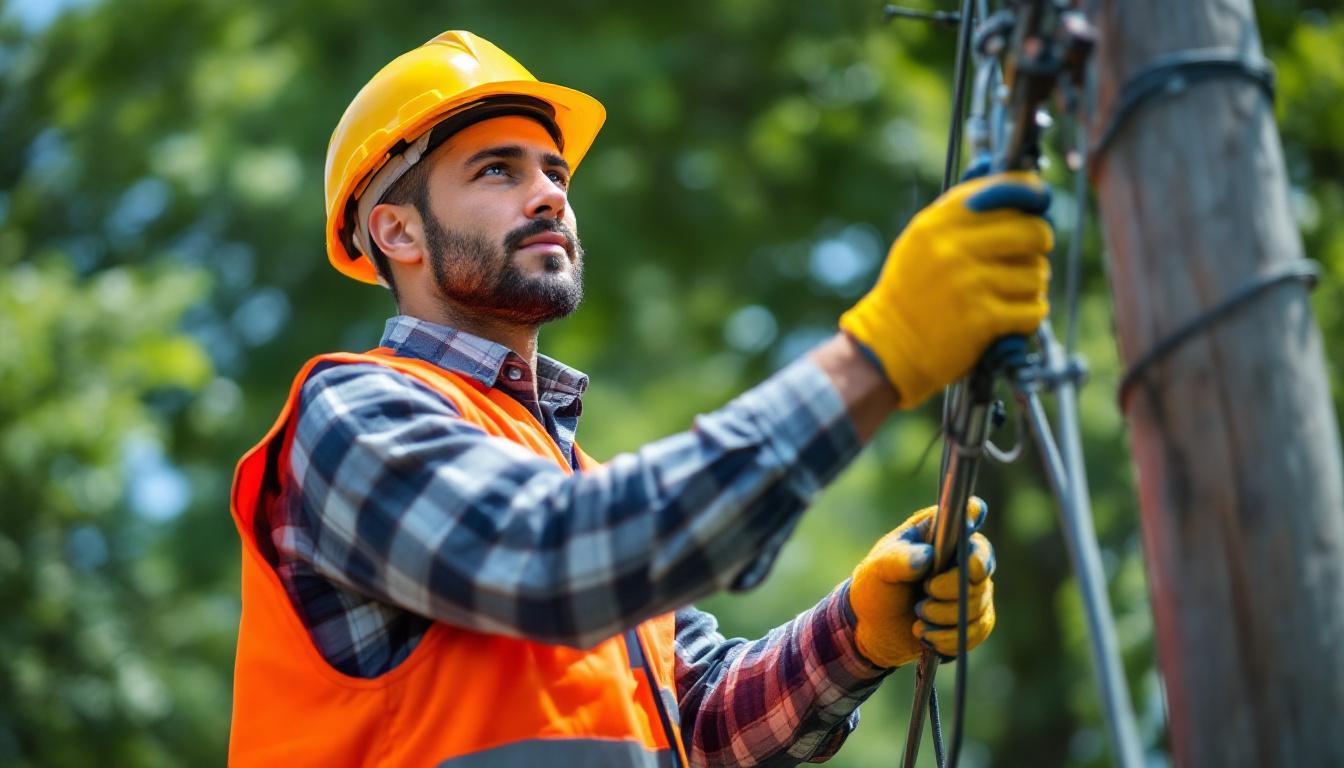
Graduates can find employment as electrical installers or technicians in sectors that manage power transmission and distribution. The demand for skilled workers in energy and utilities supports job opportunities. Entry-level roles involve installing and maintaining electrical lines and equipment.
- Common job titles include power transmission installer, electrical technician, and line worker.
- Employers include electric utilities, construction companies, and maintenance firms.
- The work often involves outdoor tasks and requires adherence to safety standards.
- Employment prospects are generally positive with opportunities for advancement through experience.
- Some graduates may work in emergency repair or infrastructure upgrades.





Continuing your studies
After completing this Associate Degree, students may choose to continue their education to deepen their knowledge or qualify for advanced positions. Options include bachelor’s degrees in electrical engineering technology or related fields. Some may also pursue certifications or specialized training.
- Further studies can enhance career prospects in engineering or management roles.
- Many colleges offer transfer agreements to four-year institutions.
- Students can also explore certifications in safety or equipment operation.
Where to study this degree (200)




















Liste des 200 établissements
- New Mexico State UniversityLas Cruces
- Madison Area Technical CollegeMadison
- Chattanooga State Community CollegeChattanooga
- San Diego Mesa CollegeSan Diego
- Washburn UniversityTopeka
- Berk Trade and Business SchoolLong Island City
- Mohawk Valley Community CollegeUtica
- South Seattle CollegeSeattle
- Weber State UniversityOgden
- Illinois Eastern Community CollegesOlney
- Aiken Technical CollegeGraniteville
- Community Care CollegeTulsa
- Owensboro Community and Technical CollegeOwensboro
- Richard J. Daley CollegeChicago
- Elizabethtown Community and Technical CollegeElizabethtown
- Southcentral Kentucky Community and Technical CollegeBowling Green
- Lincoln Technical Institute-UnionUnion
- NUC UniversityBayamon
- Apex Technical SchoolLong Island City
- Gateway Community and Technical CollegeFlorence
- UEI College-West CovinaWest Covina
- Sowela Technical Community CollegeLake Charles
- Bluegrass Community and Technical CollegeLexington
- Ashland Community and Technical CollegeAshland
- Southern California Institute of TechnologyAnaheim
- UEI College-Chula VistaChula Vista
- Escuela Tecnica de ElectricidadPonce
- Ivy Tech Community CollegeIndianapolis
- UEI College-BakersfieldBakersfield
- Lincoln College of Technology-Melrose ParkMelrose Park
- Big Sandy Community and Technical CollegePrestonsburg
- UEI College-RiversideRiverside
- Somerset Community CollegeSomerset
- Lincoln Technical Institute-MahwahMahwah
- Porter & Chester InstituteBridgeport
- Pennco Tech-BlackwoodBlackwood
- UEI College-Huntington ParkHuntington Park
- Foothill CollegeLos Altos Hills
- Bevill State Community CollegeJasper
- Lincoln Technical Institute-WhitestoneWhitestone
- Augusta Technical CollegeAugusta
- Pennco Tech-BristolBristol
- San Jacinto CollegePasadena
- San Joaquin Valley College-TemeculaTemecula
- Maysville Community and Technical CollegeMaysville
- San Joaquin Valley College-ModestoSalida
- Santiago Canyon CollegeOrange
- San Joaquin Valley College-OntarioOntario
- Texas State Technical CollegeWaco
- West Kentucky Community and Technical CollegePaducah
- Independent Training & Apprenticeship ProgramSacramento
- Lincoln Technical Institute-SheltonShelton
- Central New Mexico Community CollegeAlbuquerque
- J F Ingram State Technical CollegeDeatsville
- Lincoln Technical Institute-East WindsorEast Windsor
- Pitt Community CollegeWinterville
- Trinidad State Junior CollegeTrinidad
- UEI College-SacramentoSacramento
- Lone Star CollegeThe Woodlands
- UEI College-PhoenixPhoenix
- Delgado Community CollegeNew Orleans
- Lincoln College of Technology-ColumbiaColumbia
- State Technical College of MissouriLinn
- North Georgia Technical CollegeClarkesville
- InterCoast Colleges-FairfieldFairfield
- Lincoln Technical Institute-New BritainNew Britain
- Madisonville Community CollegeMadisonville
- UEI College-StocktonStockton
- Wake Technical Community CollegeRaleigh
- InterCoast Colleges-Rancho CordovaRancho Cordova
- Los Angeles Trade Technical CollegeLos Angeles
- Alfred State CollegeAlfred
- South Georgia Technical CollegeAmericus
- Lamson InstituteSan Antonio
- Minnesota State Community and Technical CollegeFergus Falls
- UEI College-OceansideOceanside
- MotoRing Technical Training InstituteEast Providence
- El Centro CollegeDallas
- Milwaukee Area Technical CollegeMilwaukee
- Mississippi Gulf Coast Community CollegePerkinston
- Lincoln College of Technology-IndianapolisIndianapolis
- Liceo de Arte y TecnologiaSan Juan
- Hinds Community CollegeRaymond
- Northeast Technology CenterPryor
- InterCoast Colleges-West CovinaWest Covina
- Marshalltown Community CollegeMarshalltown
- Moraine Park Technical CollegeFond du Lac
- Metropolitan Community CollegeOmaha
- Orange Technical College-South CampusOrlando
- Central Community CollegeGrand Island
- Mitchell Technical CollegeMitchell
- San Joaquin Valley College-Trades Education CenterFresno
- Houston Community College SystemHouston
- Hohokus School of Trade and Technical SciencesPaterson
- Delta Technical College-MississippiHorn Lake
- CET-SoledadSoledad
- Oklahoma State University Institute of TechnologyOkmulgee
- St. Philip's CollegeSan Antonio
- Hudson Valley Community CollegeTroy
- Dunwoody College of TechnologyMinneapolis
- Fox Valley Technical CollegeAppleton
- Atlanta Technical CollegeAtlanta
- Rio Salado CollegeTempe
- Mech-Tech CollegeCaguas
- Advantage Technical CollegeManati
- CET-San JoseSan Jose
- Athens Technical CollegeAthens
- Perry Technical InstituteYakima
- Jefferson Community and Technical CollegeLouisville
- Professional Technical InstitutionBayamon
- South Texas CollegeMcAllen
- Nash Community CollegeRocky Mount
- Palomar CollegeSan Marcos
- Waukesha County Technical CollegePewaukee
- Alpena Community CollegeAlpena
- Northwest Iowa Community CollegeSheldon
- South Louisiana Community CollegeLafayette
- Lincoln College of Technology-MariettaMarietta
- Capstone CollegePasadena
- Gaston CollegeDallas
- New Castle School of TradesNew Castle
- Northwest–Shoals Community CollegeMuscle Shoals
- Hillsborough Community CollegeTampa
- Norco CollegeNorco
- Minnesota West Community & Technical CollegeGranite Falls
- Hazard Community and Technical CollegeHazard
- Jackson CollegeJackson
- United Education Institute-Las VegasLas Vegas
- Intellitec College-Colorado SpringsColorado Springs
- Davis Applied Technology CollegeKaysville
- Ogden–Weber Applied Technology CollegeOgden
- Northeast Wisconsin Technical CollegeGreen Bay
- Colorado Mesa UniversityGrand Junction
- Northeast Community CollegeNorfolk
- Saint Paul CollegeSaint Paul
- Community College of Allegheny CountyPittsburgh
- Great Basin CollegeElko
- Truckee Meadows Community CollegeReno
- Fort Myers Technical CollegeFort Myers
- Chippewa Valley Technical CollegeEau Claire
- Catawba Valley Community CollegeHickory
- Southeast Kentucky Community and Technical CollegeCumberland
- UEI College-MesaMesa
- Pinellas Technical College-ClearwaterClearwater
- Central Piedmont Community CollegeCharlotte
- Anoka Technical CollegeAnoka
- Triangle Tech Inc-BethlehemBethlehem
- Wytheville Community CollegeWytheville
- Tidewater Community CollegeNorfolk
- North Dakota State College of ScienceWahpeton
- Indian Capital Technology Center-MuskogeeMuskogee
- Pratt Community CollegePratt
- Southern Regional Technical CollegeThomasville
- Dakota County Technical CollegeRosemount
- Virginia Highlands Community CollegeAbingdon
- Riverland Community CollegeAustin
- Laredo Community CollegeLaredo
- Baldwin Park Adult & Community EducationBaldwin Park
- Pennsylvania College of TechnologyWilliamsport
- Tennessee College of Applied Technology-KnoxvilleKnoxville
- Escuela de Peritos Electricistas de Isabela IncIsabela
- San Joaquin Valley College-BakersfieldBakersfield
- Tennessee College of Applied Technology-MorristownMorristown
- San Joaquin Valley College-HesperiaHesperia
- East Mississippi Community CollegeScooba
- Nunez Community CollegeChalmette
- Rosedale Technical CollegePittsburgh
- Kansas City Kansas Community CollegeKansas City
- Georgia Northwestern Technical CollegeRome
- Fort Hays Tech NorthwestGoodland
- Washburn Institute of TechnologyTopeka
- Porter & Chester Institute of HamdenHamden
- Johnson County Community CollegeOverland Park
- College of the SequoiasVisalia
- Bismarck State CollegeBismarck
- George Stone Technical CollegePensacola
- Southwest Wisconsin Technical CollegeFennimore
- Louisiana Delta Community CollegeMonroe
- Bellingham Technical CollegeBellingham
- Warren County Career CenterLebanon
- Kennebec Valley Community CollegeFairfield
- Ozarks Technical Community CollegeSpringfield
- Northshore Technical Community CollegeLacombe
- Lanier Technical CollegeGainesville
- Richmond Community CollegeHamlet
- Delaware County Community CollegeMedia
- Chaffey CollegeRancho Cucamonga
- Robeson Community CollegeLumberton
- Coastal Carolina Community CollegeJacksonville
- New River Community CollegeDublin
- Industrial Management Training InstituteWaterbury
- Lansing Community CollegeLansing
- Durham Technical Community CollegeDurham
- Isothermal Community CollegeSpindale
- Dabney S Lancaster Community CollegeClifton Forge
- Grand Rapids Community CollegeGrand Rapids
- Centura College-NorfolkNorfolk
- South Mountain Community CollegePhoenix
- West Georgia Technical CollegeWaco
- Central Wyoming CollegeRiverton
Frequently asked questions
What prior knowledge is needed to start this program?
A high school diploma or equivalent is required, with basic skills in math and science. No advanced electrical knowledge is needed before starting.
Are there practical training opportunities included?
Yes, the program includes hands-on labs and workshops to practice installation and maintenance skills.
Can I work while studying this degree?
Many students manage part-time work, but the program requires commitment to both classes and practical sessions.
Is this degree recognized by employers in the energy sector?
Yes, it is designed to meet industry needs and is valued by utilities and companies involved in power transmission.
Are internships mandatory in this program?
Internships may be offered or encouraged but are not always mandatory; they provide valuable real-world experience.
What safety training is included?
Students receive training on safety procedures for working with high voltage and electrical equipment to prepare for fieldwork.
Can I continue my studies after this degree?
Yes, graduates can pursue bachelor’s degrees in related fields or specialized certifications to advance their careers.
Is this program selective?
The program is generally accessible and not highly selective, welcoming a range of students interested in electrical work.
