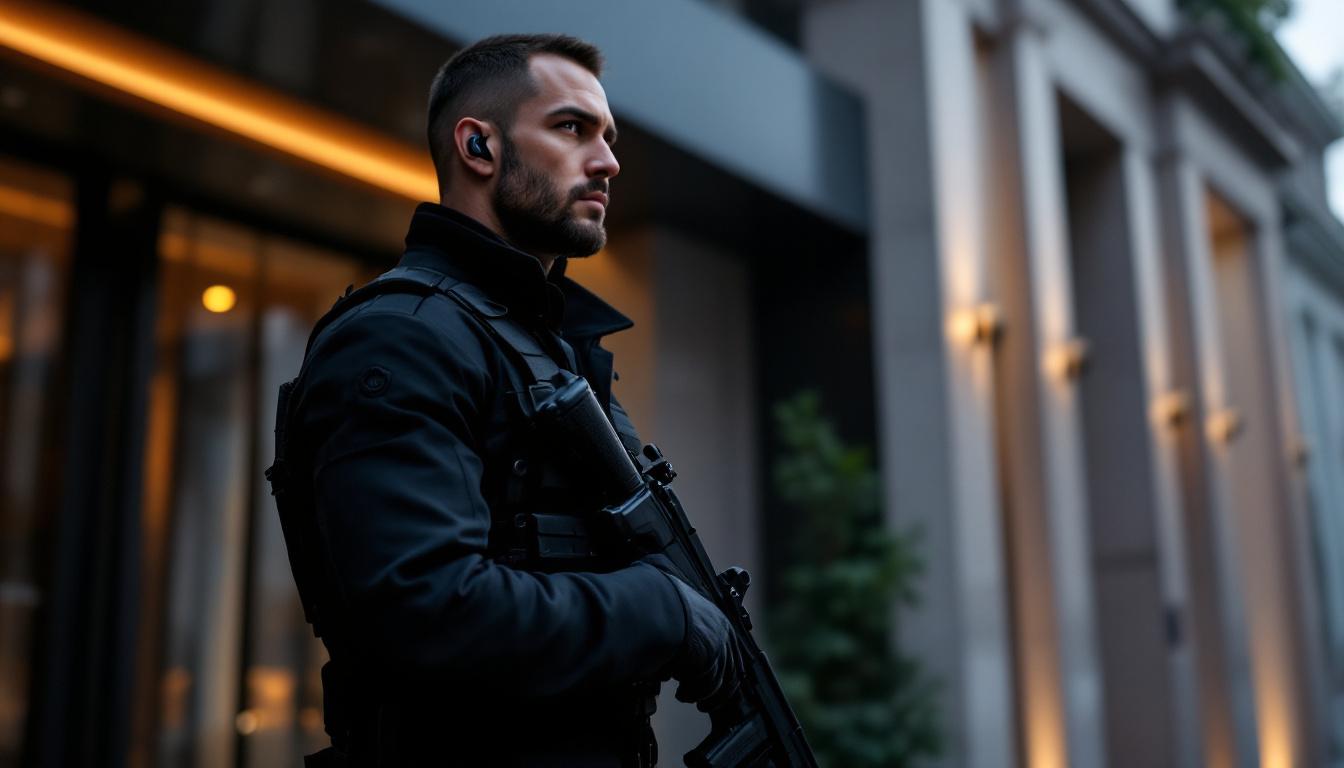
Security Guards
Security Guards ensure safety by monitoring and protecting premises from threats.
About
Security Guards play a crucial role in maintaining safety and order. They are responsible for guarding, patrolling, or monitoring premises to prevent theft, violence, or infractions of rules. Their duties may include operating x-ray and metal detector equipment to enhance security measures. Security Guards often serve as the first line of defense in various settings, ensuring a secure environment for both people and property. Their presence deters criminal activity and provides peace of mind for employees, clients, and visitors. With a high social interaction score, they must communicate effectively with diverse groups, manage stressful situations, and often collaborate with law enforcement agencies to handle incidents swiftly and professionally.
Entering the profession — United States
Access to this profession is generally direct through security firms or agencies. Background checks and sometimes licensing are required. Prior experience in law enforcement or military can facilitate entry and advancement.
Training — United States
Formation for this role relies on professional training programs focusing on security protocols, legal regulations, and emergency response. Most candidates complete a high school diploma followed by specific security training courses and certifications.
The job market — United States
The job market shows steady demand due to ongoing needs for physical security across diverse sectors. While automation affects some monitoring tasks, the human element remains crucial for effective security operations.
Skills
Technical skills
- Operate surveillance equipment to monitor premises
- Manage access control systems to regulate entry
- Use metal detectors to enhance security checks
- Write detailed reports on incidents and activities
- Respond to alarms and investigate disturbances
Interpersonal skills
- Effective communication with diverse groups
- Conflict resolution skills to manage disputes
- Empathy to understand and assist individuals in distress
- Team collaboration for efficient security operations
- Adaptability to adjust to changing security needs
Tasks
- Monitor surveillance cameras to detect any suspicious activities
- Conduct regular patrols around premises to ensure security
- Operate x-ray and metal detectors at entry points
- Manage access control systems and verify identifications
- Respond promptly to alarms and investigate disturbances
- Provide clear and concise reports on incidents and activities
- Assist in emergency procedures and evacuations
- Collaborate with law enforcement during investigations
- Guide visitors and clients to appropriate locations
- Maintain a visible presence to deter criminal activities
Work environments
Work environments for professionals in this sector may vary:
Career paths
- Progress to Security Supervisor to oversee a team of guards
- Advance to Security Manager to manage operations for an organization
- Become a Loss Prevention Specialist to focus on reducing theft in retail
- Transition to a Corporate Security Advisor to consult on security strategies
- Move into a Law Enforcement Officer role for a career in law enforcement