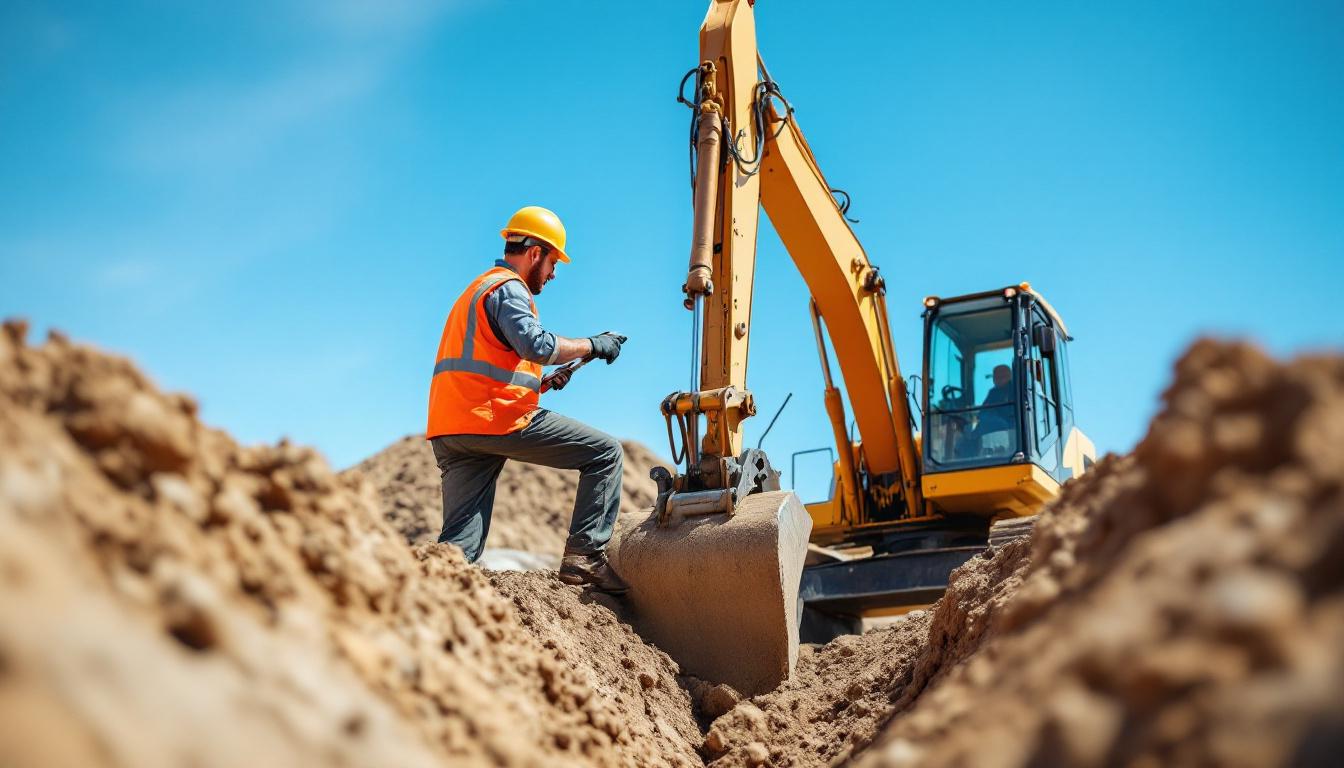
Public works equipment operator
Operate advanced machinery to ensure timely completion and compliance of public infrastructure projects while maintaining detailed operational logs.
About
As a Public Works Equipment Operator, you will directly impact the efficiency and safety of construction projects within the public sector. Operating sophisticated machinery, you will work under tight deadlines to ensure infrastructure is built to high standards. Collaborating with site managers and compliance officers, you will maintain daily logs using site management software while adhering to regulatory standards. Your role is crucial in streamlining operations and ensuring that all equipment is used to maximize yields, reduce downtime, and enhance operational capacity, driving continuous improvement across projects.
Entering the profession — Denmark
Entry usually requires completion of vocational training or relevant apprenticeships. Prior experience in machinery operation can facilitate access to this profession.
Training — Denmark
Training typically involves vocational education focused on heavy machinery operation, safety protocols, and basic mechanical skills. Apprenticeships and on-the-job training are common pathways.
The job market — Denmark
Employment opportunities are generally found in public works departments and construction companies. Demand is stable with occasional fluctuations based on infrastructure projects.
Skills
Technical skills
- Expertise in heavy machinery operation
- Proficient in site management software for efficient tracking
- Conduct routine equipment maintenance to ensure longevity
- Ensure safety compliance with current regulations
- Monitor performance indicators for optimal efficiency
- Strong regulatory understanding to ensure adherence
Interpersonal skills
- Precision in execution for high-quality outcomes
- Attention to detail in all operational tasks
- Effective communication with team members and stakeholders
- Problem-solving to overcome operational challenges
- Time management to meet project deadlines
Tasks
- Operate heavy construction equipment in accordance with site plans and regulations.
- Conduct routine inspections and maintenance to ensure machinery complies with safety standards.
- Collaborate effectively with site managers to meet project deadlines efficiently.
- Utilize site management software to log equipment performance on a daily basis.
- Monitor performance indicators to enhance machinery efficiency and minimize equipment downtime.
- Communicate with compliance officers to ensure adherence to environmental guidelines.
- Report any operational challenges to the project management team immediately.
- Assist in the coordination of logistical requirements for equipment transport.
- Analyze site requirements to determine the optimal equipment needed for specific tasks.
- Implement continuous improvement practices to optimize equipment utilization.
Work environments
Work environments for professionals in this sector may vary:
Career paths
- Progress to Site Manager overseeing larger projects
- Advance to Project Coordinator managing multiple tasks
- Become a Maintenance Supervisor responsible for machinery upkeep
- Transition to Equipment Training Specialist educating new operators