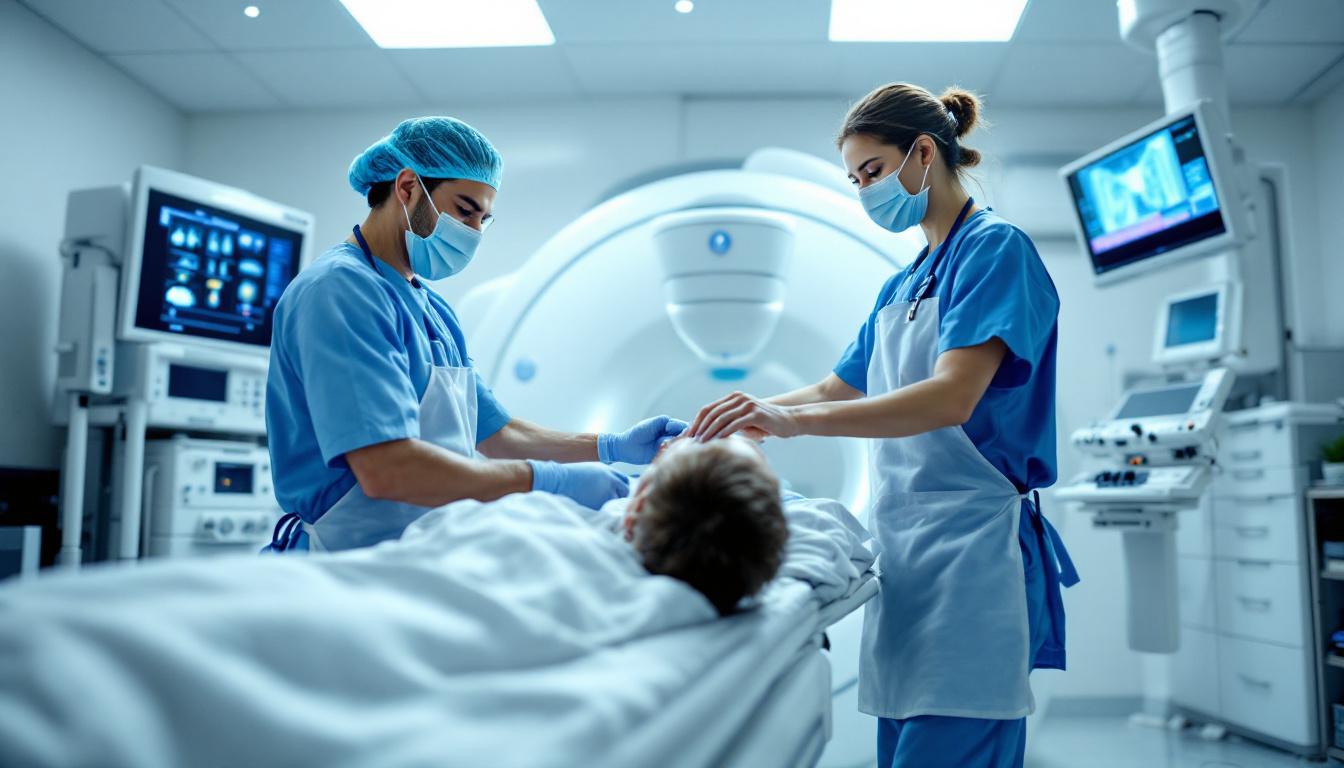
Orthopedic orthotist
Design and fit custom orthopedic devices to restore mobility and improve quality of life for patients with musculoskeletal impairments.
About
As an Orthopedic Orthotist, you play a critical role in improving patient mobility and quality of life within a healthcare setting. Your expertise in designing and fitting custom orthopedic devices helps to restore physical function for patients with musculoskeletal impairments. You will collaborate closely with medical professionals and leverage advanced diagnostic tools to tailor solutions that meet specific medical needs. This position demands precision and decision-making skills in order to comply with both clinical standards and patient-specific constraints.
Entering the profession — United Kingdom
Access to this profession is generally through specialized university degrees in orthotics and prosthetics, combined with clinical internships. Registration with a professional regulatory body is required to practice legally.
Training — United Kingdom
The formation relies on a professional curriculum focused on biomedical sciences, clinical practice, and technical skills in orthotic and prosthetic device design and fabrication. It includes theoretical courses and substantial hands-on clinical training to prepare practitioners for patient care and device customization.
The job market — United Kingdom
The job market is stable with moderate demand driven by healthcare needs for mobility support and rehabilitation services. Employment is predominantly in public and private healthcare sectors, with limited remote work opportunities due to the hands-on nature of the role. Automation risk remains low given the requirement for personalized patient care and bespoke device fabrication.
Skills
Technical skills
- Proficient in CAD software for device design
- Expertise in 3D modeling for precise fittings
- Knowledge of material science for durable devices
- Understanding of biomechanics to enhance functionality
- Skilled in prosthetics and orthotics fabrication
- Utilizes advanced patient assessment tools
Interpersonal skills
- Exhibits strong attention to detail in every task
- Demonstrates analytical thinking for problem-solving
- Shows deep patient empathy in all interactions
- Effective in problem-solving under pressure
- Excellent communication skills with diverse teams
- Highly adaptable to changing environments
Tasks
- Conduct detailed assessments using diagnostic tools to evaluate patient needs.
- Design and fabricate custom orthotic devices within compliance standards.
- Collaborate with healthcare providers to optimize patient treatment plans.
- Monitor patient progress and adjust orthotic solutions as necessary.
- Ensure high standards of fit and performance through quality checks.
- Educate patients and caregivers on the use, care, and maintenance of devices.
- Maintain comprehensive records of patient treatments and device fittings.
- Manage inventory levels of materials and components within budget.
- Update skills and knowledge to comply with current compliance and technology standards.
- Work closely with suppliers to secure the best materials for device fabrication.
Work environments
Work environments for professionals in this sector may vary:
Career paths
- Progress to a Senior Orthotist role, leading complex cases
- Advance to Orthotic Department Manager to oversee operations
- Become a Research Specialist driving innovation
- Develop as a Clinical Educator to train future orthotists
- Transition to a Product Development Consultant role