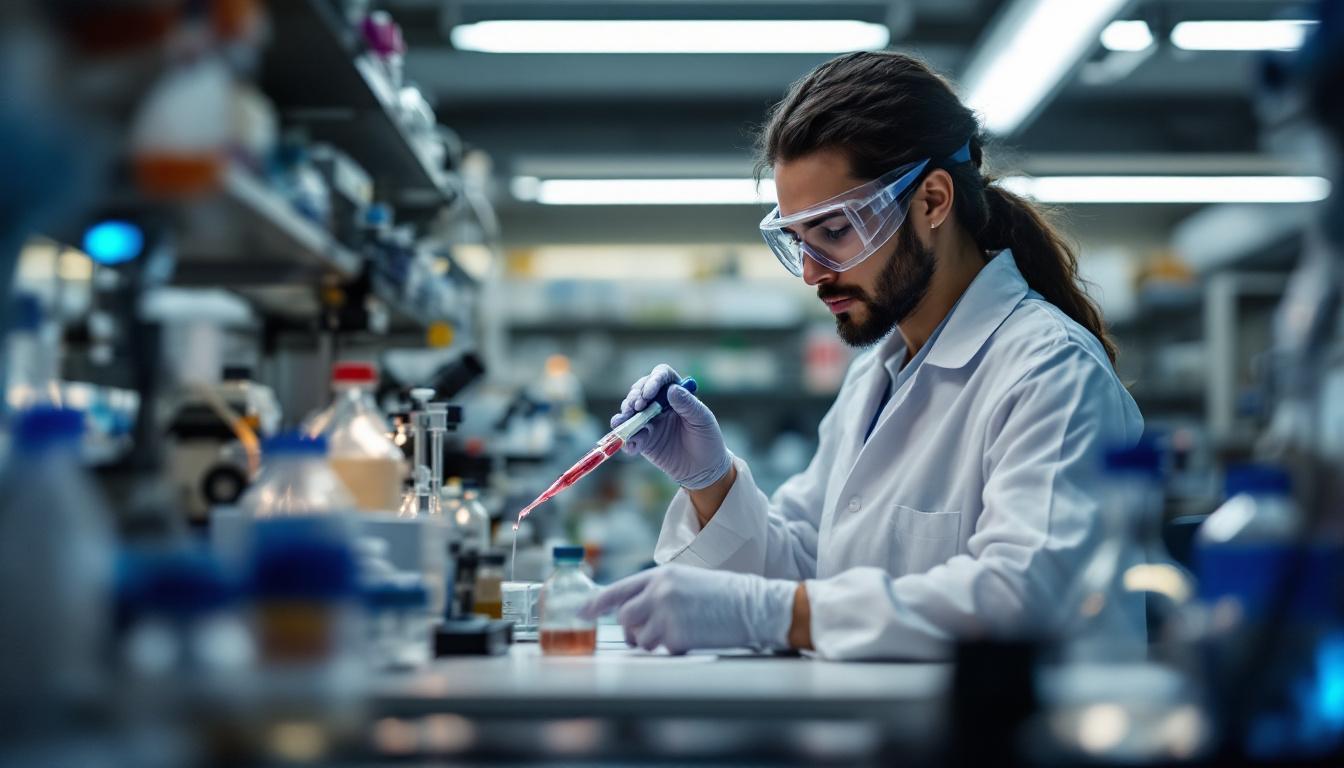
Medical Biologist
Conduct laboratory tests and analyses to accurately diagnose diseases and support effective patient treatment and management.
About
As a Medical Biologist, you will play a critical role in a healthcare environment, focusing on diagnosing diseases through laboratory testing and analysis. Your expertise will support effective patient treatment and management by providing precise biological data to doctors and healthcare providers. Utilizing advanced laboratory tools and techniques, your work will directly contribute to the healthcare team's ability to significantly impact patient outcomes and uphold quality assurance standards.
Entering the profession — United Kingdom
Access to the profession is generally through accredited university degrees followed by registration with professional bodies. Alternative routes include apprenticeships and conversion courses for related science graduates.
Training — United Kingdom
The formation relies on a professional curriculum oriented towards biomedical sciences, including theoretical courses and practical laboratory training. Postgraduate specialization is common to gain expertise in clinical biology fields.
The job market — United Kingdom
The job market is stable with consistent demand in healthcare and diagnostic sectors. Technological advances require ongoing training but also offer opportunities for skilled professionals. Remote work is not typical due to laboratory-based duties.
Skills
Technical skills
- Proficient in using diagnostic lab tools effectively.
- Experienced in data interpretation for accurate results.
- Skilled in implementing quality assurance measures.
- Knowledgeable about regulatory compliance requirements.
- Expertise in lab workflow optimization for efficiency.
- Competent with microscopy techniques and applications.
Interpersonal skills
- Exhibits strong analytical thinking in problem-solving.
- Highly detail-oriented with meticulous focus.
- Fosters effective team collaboration for success.
- Communicates clearly with patients and colleagues.
- Demonstrates sound decision making abilities.
- Proficient in problem solving under complex scenarios.
Tasks
- Conduct in-depth analysis using lab diagnostic tools to identify pathogens.
- Monitor biological testing accuracy under compliance constraints and report outcomes.
- Optimize lab workflows to improve turnaround times for test results.
- Collaborate with healthcare providers to interpret results for patient treatment plans.
- Ensure lab equipment calibration and maintenance within regulatory guidelines.
- Prepare detailed reports and data analytics for stakeholder review.
- Lead quality assurance projects to enhance testing protocols and align with performance metrics.
- Implement updated laboratory procedures to comply with changing regulatory standards.
- Negotiate with suppliers to maintain lab supplies within budget constraints.
- Train junior staff in lab techniques, ensuring skills meet test performance criteria.
Work environments
Work environments for professionals in this sector may vary:
Career paths
- Advance to a Senior Biologist role with increased responsibilities.
- Progress to Lab Manager overseeing lab operations.
- Transition into a Healthcare Consultant providing expert advice.
- Pursue a career as a Research Scientist driving innovation.
- Become an Academic Researcher contributing to scientific knowledge.