Country
Sector
Search a job
Marine Engineers and Naval Architects
Design the vessels that conquer the seas, ensuring safety and efficiency at every wave.
12 000 – 45 000 TMT (T)
Average salary / year
Bachelor's degree or higher in marine engineering, naval architecture or related fields is required.
Education level
00
Automation level
Medium
Difficulty
Stable
Employability
4-6 years
Market tension
Medium
Intl. mobility
Rare
Automation level
Medium
Difficulty
Stable
Employability
4-6 years
Market tension
Medium
Intl. mobility
Rare
About
Marine Engineers and Naval Architects play a crucial role in the design, development, and evaluation of marine vessels and related machinery. Their expertise ensures that ships operate efficiently and safely, harnessing innovative technologies to improve propulsion systems and power supply. Their work is vital in the shipping industry, impacting global trade and transportation. These professionals often collaborate with multidisciplinary teams to create vessels that meet international standards and environmental regulations, contributing to the sustainable development of the maritime sector.
Skills
Technical skills
- Design propulsion systems for optimal efficiency
- Evaluate ship machinery for performance and reliability
- Conduct risk assessments for new marine designs
- Utilize CAD software for detailed ship blueprints
- Ensure compliance with international maritime standards
- Optimize power supply systems for energy efficiency
Interpersonal skills
- Exhibit strong communication to collaborate with interdisciplinary teams
- Demonstrate adaptability to embrace new technologies and methods
- Show leadership qualities for managing engineering projects
- Apply critical thinking to solve complex engineering problems
- Maintain attention to detail to uphold high safety standards
Tasks
- Design and develop advanced propulsion systems for marine vessels
- Evaluate the efficiency and safety of ship machinery
- Collaborate with teams on the integration of new technologies
- Ensure compliance with international marine safety standards
- Optimize power supply systems for energy efficiency
- Conduct risk assessments for ship designs
- Supervise the construction of ship components
- Innovate in the use of sustainable materials
Work environments
Work environments for professionals in this sector may vary:
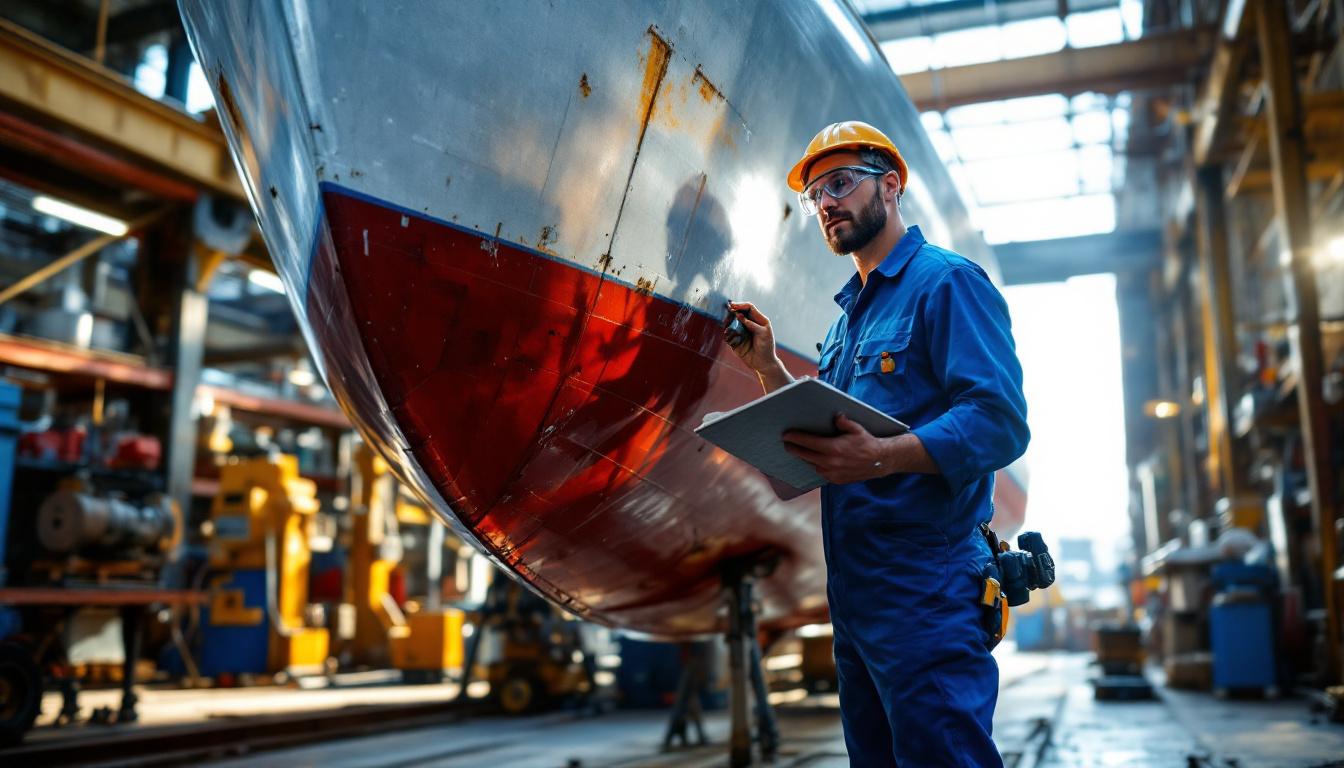
In the shipyard, oversee the construction and assembly of marine vessels
At the design office, create blueprints and specifications for new ship models
Within a consultancy firm, advise on the implementation of maritime technologies
In a research facility, develop innovative propulsion and power systems
With the port authority, ensure compliance with safety and environmental standards
At a marine equipment manufacturer, work on the production of ship machinery
In an educational institution, teach future engineers about naval architecture
Career paths
- Progress to Senior Marine Engineer to lead complex projects and teams
- Advance as a Naval Architect Manager to oversee architectural departments
- Become a Research and Development Director to innovate in maritime technologies
- Specialize as a Maritime Safety Consultant focusing on safety protocols
- Elevate to Port Authority Director to manage port operations and regulations
Profile sought
Possess analytical thinking to assess and improve ship designs
Demonstrate technical proficiency in using CAD software for naval architecture
Maintain attention to detail for ensuring compliance with safety standards
Excel in team collaboration to work effectively with multidisciplinary teams
Show problem solving ability to tackle engineering challenges
How to become a Marine Engineers and Naval Architects?