Groom and animal keeper
Maintain high grooming standards and implement care routines to support the health and wellbeing of stabled animals.
About
As a Groom and Animal Keeper in the equestrian sector, your role significantly impacts the health and performance of the animals under your care. You will operate within large stables, ensuring the animals are groomed and maintained to exemplary standards. Working closely with veterinarians and trainers, you will support the overall wellbeing of the animals, implementing care routines using specialized tools while adhering to strict safety and welfare guidelines.
Entering the profession — United Kingdom
Access to the profession typically requires completion of secondary education followed by vocational training or apprenticeship. Prior experience with horses is highly advantageous.
Training — United Kingdom
Training is based on vocational programs focused on practical skills in horse care, stable management, and animal welfare. Apprenticeships provide hands-on experience under supervision.
The job market — United Kingdom
The job market is moderately competitive with steady demand in sectors such as equestrian sports, agriculture, and animal welfare. While automation risk is low, physical demands and hands-on care ensure continued need for skilled workers.
Skills
Technical skills
- Expertise in animal nutrition for optimal health
- Mastery of horse grooming techniques to maintain coat quality
- Experience in stable maintenance ensuring a safe environment
- Proficiency in health monitoring to detect early signs of illness
- Skill in medication administration following veterinary guidelines
- Effective veterinary collaboration for comprehensive care
- Knowledge in feed management tailored to dietary needs
- Adherence to sanitation protocols for disease prevention
- Capability in weight tracking to monitor health progress
- Competence in equipment handling for safe operations
Interpersonal skills
- Attention to detail ensuring high quality standards
- Team collaboration fostering a supportive environment
- Time management for efficient task completion
- Problem-solving approach to address unexpected challenges
- Empathy towards animals enhancing care quality
- Adaptability to changing work conditions
- Strong observation skills for early detection of issues
- Effective communication bridging gaps between teams
Tasks
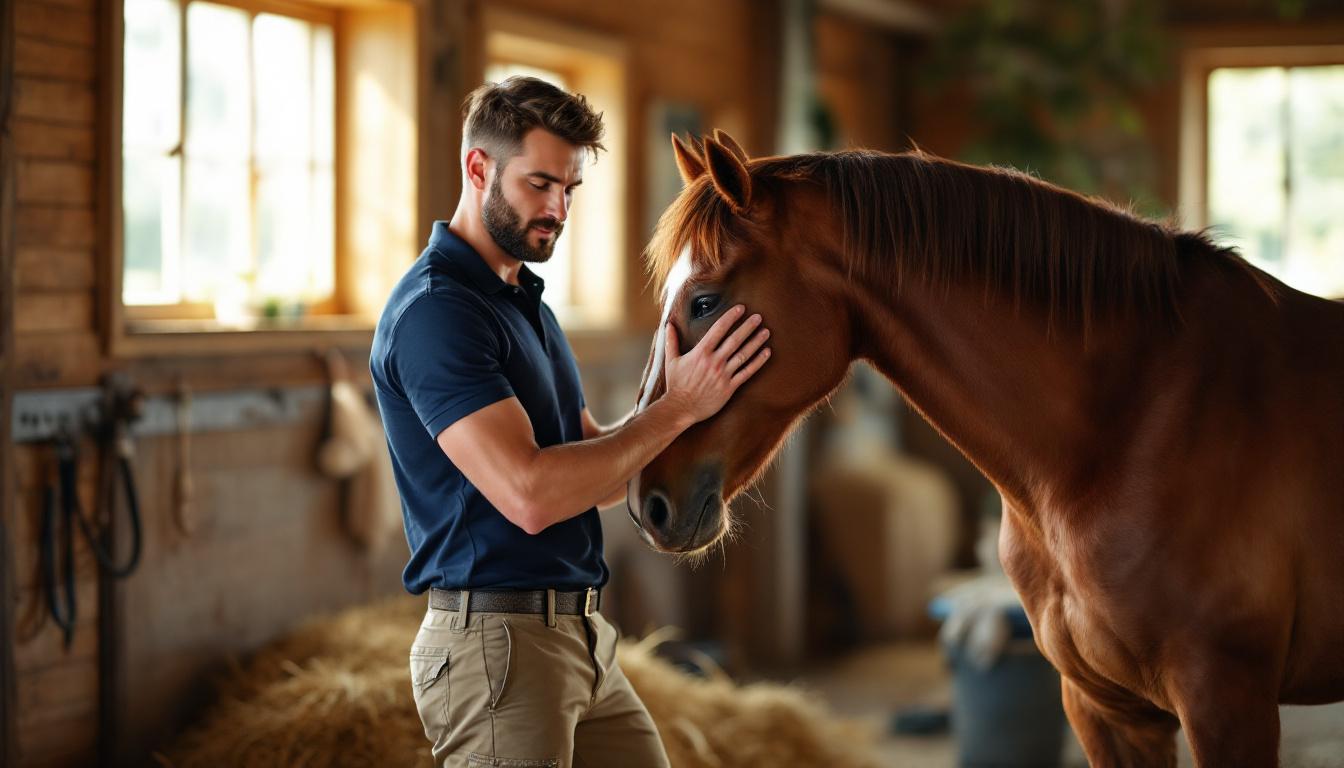
- Groom horses daily using specialized brushes and tools to maintain their coats.
- Monitor animal health by tracking food intake, weight, and changes in behavior.
- Maintain stables in excellent condition, ensuring cleanliness and order.
- Administer medications as per veterinary instruction, following compliance protocols.
- Coordinate with trainers to schedule exercise sessions, ensuring performance optimization.
- Implement feeding plans based on dietary requirements using supporting equipment.
- Conduct regular walk-throughs to inspect living conditions, ensuring safety.
- Document health metrics and feeding patterns, reporting any concerns immediately.
- Facilitate communication between management and veterinary staff regarding animal care needs.
Work environments
Work environments for professionals in this sector may vary:
Career paths
- Progress to Stable Manager to oversee operations and staff
- Advance to Equestrian Trainer focusing on horse and rider development
- Become a Veterinary Assistant to support clinical care
- Specialize as an Animal Welfare Specialist advocating for ethical treatment
- Pursue a career as an Equine Nutritionist optimizing dietary plans