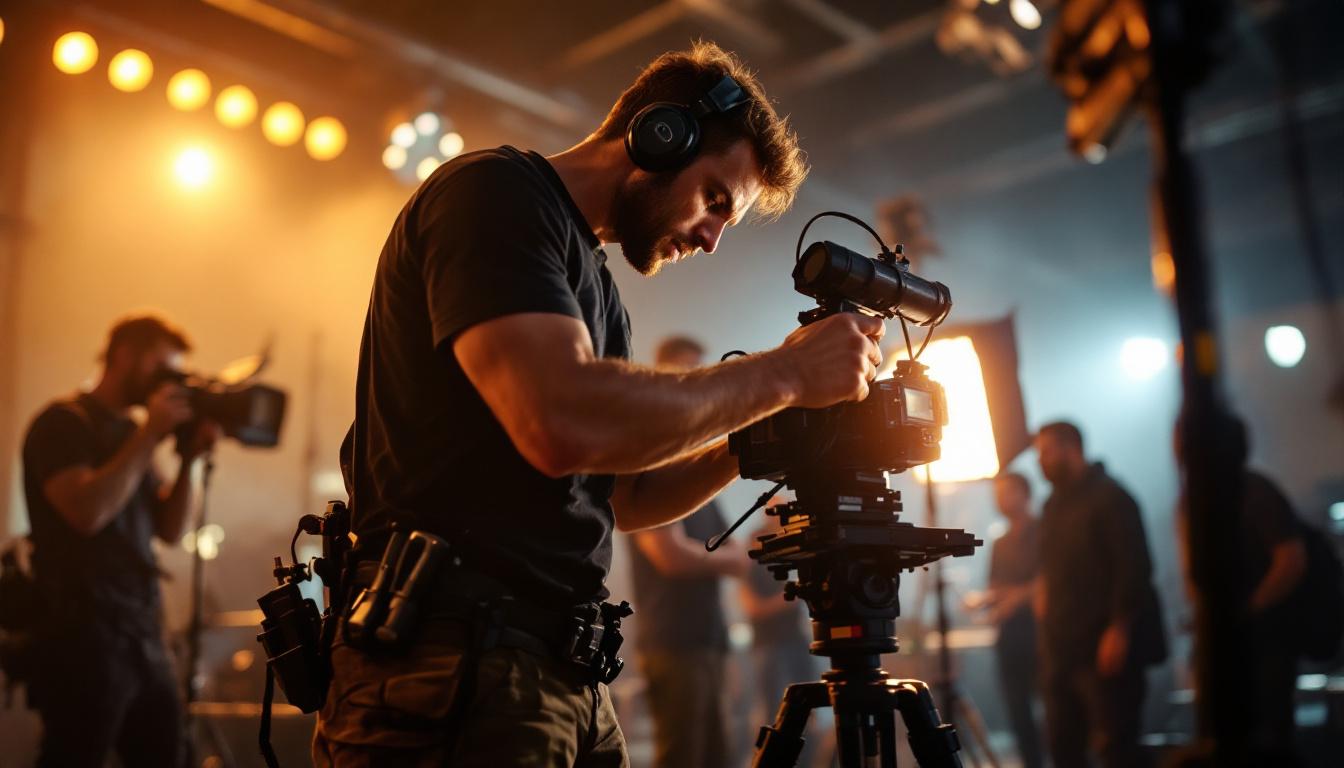
Floor Director
Coordinate and manage the production floor to ensure seamless execution of live and recorded broadcasts in the studio.
About
As a Floor Director in a dynamic studio environment, you play a crucial role in coordinating and managing the production floor to ensure seamless execution of live and recorded broadcasts. You will work closely with producers and directors to implement shooting schedules, manage staff and cast movements, and ensure compliance with broadcasting regulations. Your expertise in using studio floor equipment and communication tools will be pivotal in maintaining efficiency and achieving broadcast targets.
Entering the profession — Ireland
Entry is often through internships or assistant roles in television or live event production, with on-the-job training being crucial.
Training — Ireland
The Floor Director role generally requires a bachelor's degree in media or communications, complemented by practical experience in live production environments.
The job market — Ireland
The job market is stable with demand in broadcasting and live event sectors. Experience and certifications improve employability.
Skills
Technical skills
- Expertise in broadcast equipment management for optimal performance
- Proficient with live communication tools for real-time updates
- Skilled in using scheduling software for efficient planning
- Experience with studio logistics to streamline operations
- Understanding of compliance regulations to maintain standards
- Ability to solve real-time problems during broadcasts
Interpersonal skills
- Exhibit leadership under pressure to guide teams
- Ensure clear communication to facilitate understanding
- Coordinate teams effectively for smooth operations
- Adaptability to navigate changing environments
- Resolve conflicts with a focus on collaborative solutions
- Employ critical thinking to address challenges
Tasks
- Coordinate with producers to establish clear shooting schedules using industry-standard planning tools.
- Manage real-time communications with directors to address last-minute changes and adhere to tight broadcast deadlines.
- Monitor equipment efficiency on the studio floor, ensuring all technical specifications are met for live broadcasts.
- Negotiate with crew members to resolve scheduling conflicts, optimizing resource allocation and minimizing downtime.
- Report to management on production floor operations, providing insights from analytics tools to improve performance metrics.
- Implement compliance protocols in alignment with broadcasting standards, guaranteeing smooth broadcast operations.
- Supervise rehearsals, aligning performance with script requirements and director’s vision.
- Collaborate with technical teams to troubleshoot equipment malfunctions during live recordings.
- Train new floor staff, prioritizing operational procedures and safety guidelines.
- Coordinate audience and talent logistics, ensuring their effective flow and engagement during productions.
Work environments
Work environments for professionals in this sector may vary:
Career paths
- Progress to Studio Manager to oversee all studio operations
- Advance to Broadcast Manager managing live broadcast logistics
- Become a Production Director leading creative projects
- Transition to Operations Director ensuring seamless operations
- Move into a Program Director role focusing on content strategy