
Doctor of Philosophy (PhD) in Archeology
A Doctor of Philosophy (PhD) in Archeology develops advanced research skills in archaeology, preparing students for academic, research, and cultural heritage careers in the United States.
About
The Doctor of Philosophy (PhD) in Archeology is a research-focused degree designed for students who want to deeply study human history through material remains. It is aimed at those interested in academic research, teaching, or working in museums and cultural resource management. This doctorate represents the highest level of education in the field and allows graduates to become university professors, professional researchers, or experts in archaeological preservation.
- The PhD usually takes between four and seven years to complete in the US.
- It involves original research leading to a doctoral dissertation that contributes new knowledge.
- The degree suits students with a strong background in archaeology or related disciplines like anthropology or history.
- Graduates often pursue careers in universities, museums, or cultural heritage organizations.
- The program develops skills in fieldwork, data analysis, and academic writing.
What you study
The PhD program in Archeology combines coursework, fieldwork, and independent research over several years. Early years focus on advanced classes and developing research proposals, while later years emphasize dissertation research.
- Students study archaeological theory, methods of excavation, and artifact analysis.
- Courses cover topics like ancient cultures, dating techniques, and archaeological ethics.
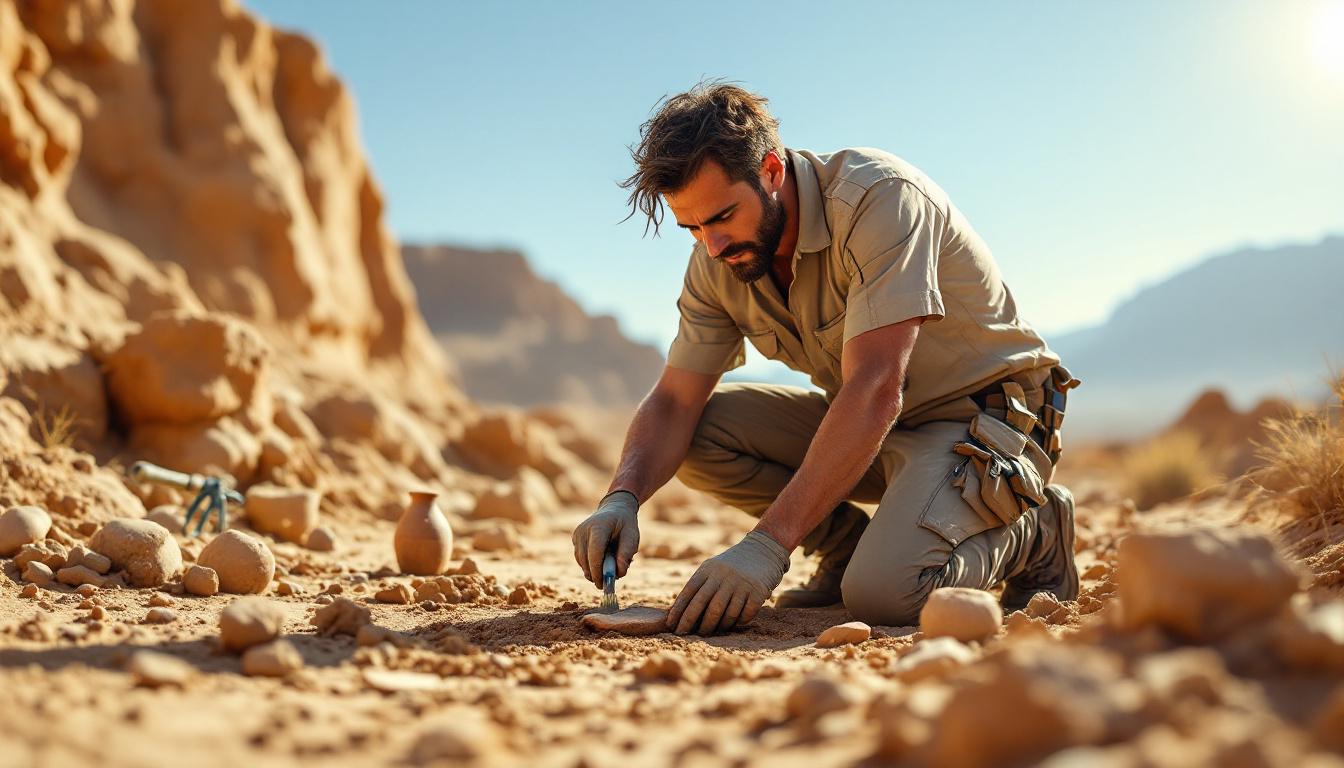
- Fieldwork is a key component, with students participating in excavations to gain practical experience.
- Research skills include data collection, statistical analysis, and GIS mapping.
- The final dissertation requires original research and can take several years to complete.
- Students often attend seminars and present findings to academic communities.
How to get in
Admission to a PhD program in Archeology in the US requires a relevant master's degree or equivalent experience. The process is competitive and focuses on academic preparation and research potential.
- Applicants must hold a master’s degree in archaeology or a related field.
- They submit transcripts, letters of recommendation, and a research proposal.
- Standardized tests like the GRE may be required by some universities.
- Strong interest in research and prior field experience are valued.
- Interviews or writing samples might be part of the selection.
Day to day
A typical year in a PhD archaeology program mixes coursework, fieldwork, and research activities. The schedule varies with the stage of the program.
- Early years involve attending seminars and completing coursework.
- Field seasons during warmer months allow students to participate in excavations and data collection.
- Much time is spent on library research and writing for the dissertation.
- Students often collaborate with professors and peers on projects.
- There is no formal alternance or work-study system typical of undergraduate programs.
Careers this degree leads to
Graduates with a PhD in Archeology find opportunities primarily in academia, research institutions, and cultural organizations. The job market can be competitive but offers diverse paths.
- Many become university professors teaching archaeology and related subjects.
- Others work as museum curators or archaeological consultants.
- Positions exist in cultural resource management firms and government agencies.
- The insertion into professional roles is generally gradual, requiring postdoctoral research or project experience.
- Some graduates engage in public archaeology or heritage preservation.

Continuing your studies
After earning a PhD in Archeology, further studies are uncommon but some graduates pursue postdoctoral research or specialized certifications.
- Postdoctoral fellowships allow for focused research and publication.
- Some may obtain additional qualifications in museum studies or heritage management.
- Others might shift toward related fields such as anthropology or history through interdisciplinary projects.
Where to study this degree (9)







Liste des 9 établissements
- Boston UniversityBoston
- University of California-Los AngelesLos Angeles
- Bryn Mawr CollegeBryn Mawr
- University of Missouri-ColumbiaColumbia
- University of PennsylvaniaPhiladelphia
- Michigan Technological UniversityHoughton
- Brown UniversityProvidence
- University of Washington-Seattle CampusSeattle
- Lipscomb UniversityNashville
Frequently asked questions
What prior education is needed to apply for a PhD in Archeology?
Applicants typically need a master's degree in archaeology or a related field. Relevant research experience and a strong academic record are important.
How long does it usually take to complete this PhD?
The program generally lasts between four and seven years, depending on the research topic and progress.
Is there practical fieldwork during the program?
Yes, students participate in archaeological excavations and field studies to gain hands-on experience.
Can I work while studying for this PhD?
Most students focus full-time on research and coursework; formal work-study or alternance programs are uncommon.
What career options are available after this degree?
Graduates often work as university professors, researchers, museum curators, or in cultural resource management.
Is the admission process competitive?
Yes, admission is very selective and based on academic qualifications, research proposals, and recommendations.
Can I continue studies after completing the PhD?
Some graduates pursue postdoctoral research or specialized certifications in museum or heritage fields.
Are there any standardized tests required for admission?
Some universities may require the GRE, but requirements vary by institution.