Master's Degree in Archeology
A Master's Degree in Archeology trains students in studying ancient civilizations through excavation and analysis, preparing them for careers in research, heritage management, or education.
About
The Master's Degree in Archeology is a graduate program in the United States designed for students who have completed a bachelor's degree and wish to deepen their knowledge of past human societies through material remains. This diploma is aimed at those interested in history, anthropology, and field research. It allows graduates to work in academic research, cultural resource management, museums, or education. The program emphasizes understanding human history by studying artifacts, structures, and landscapes.
- The degree typically lasts one to two years depending on the university and program structure.
- It is intended for students with a background in archeology, anthropology, history, or related fields.
- Graduates can pursue roles such as field archeologist, museum curator, or heritage consultant.
- The program combines theoretical knowledge with practical skills in excavation and analysis.
- It prepares students for further doctoral studies or professional work in archeology and related sectors.
What you study
The Master's program in Archeology offers a mix of courses and hands-on experiences to build expertise in the field. Students start with foundational classes and progress to specialized topics and research projects. Practical work is an important part of the curriculum.
- Core courses cover archaeological theory, field methods, and laboratory analysis.
- Students learn to use tools and technologies like GIS mapping and radiocarbon dating.
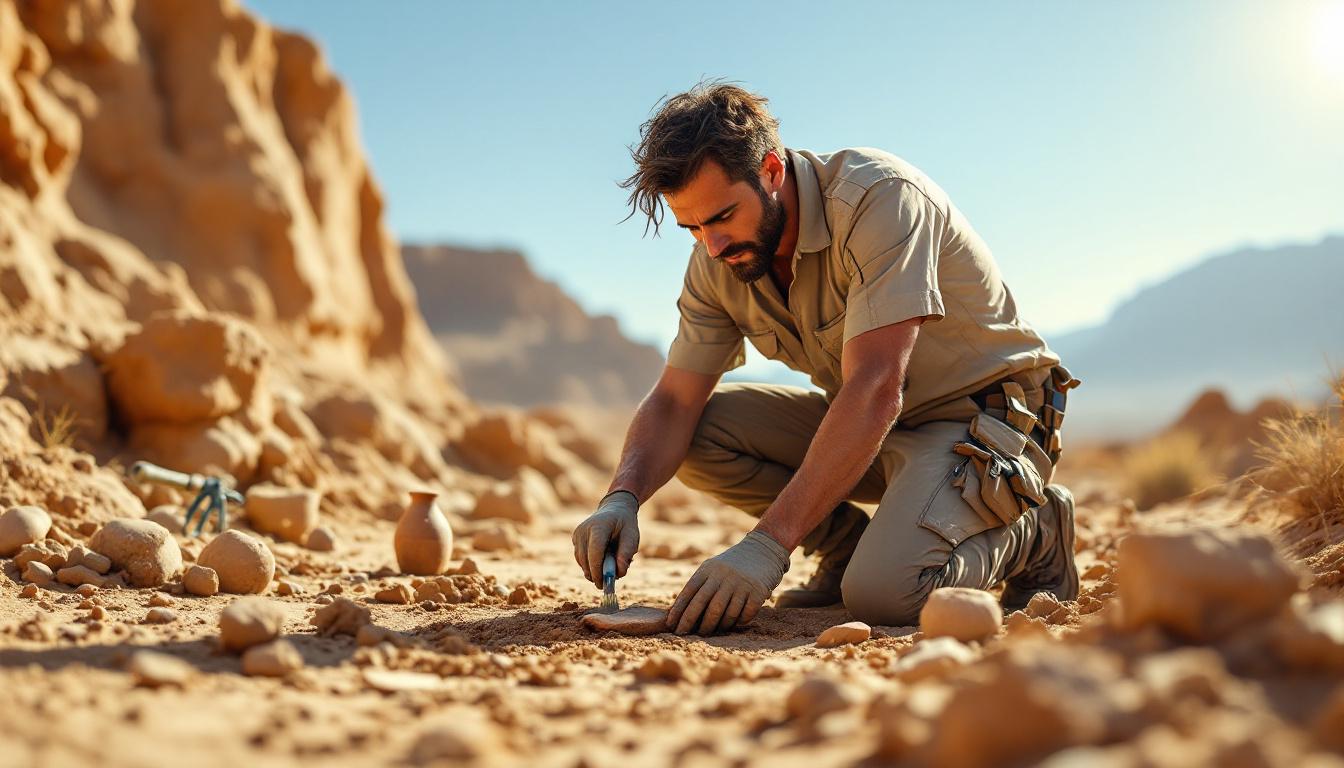
- The program includes fieldwork seasons where students participate in excavations to gain real-world experience.
- Advanced seminars focus on specific regions, time periods, or themes such as prehistoric cultures or urban archaeology.
- Research projects or a thesis are required to demonstrate mastery of a chosen topic.
- Some programs offer opportunities for internships in museums or cultural agencies.
How to get in
Admission to a Master's Degree in Archeology in the US requires a relevant bachelor's degree and a formal application process. Candidates should demonstrate academic ability and interest in archeology or related disciplines.
- Applicants must hold a bachelor's degree, often in archeology, anthropology, history, or a related field.
- The application usually includes transcripts, letters of recommendation, and a statement of purpose.
- Some programs require GRE scores, though this is becoming less common.
- Relevant field experience or internships can strengthen an application.
- Admissions committees look for motivation, research interests, and academic preparation.
Day to day
The daily life of a Master's archeology student combines coursework, research, and practical activities. The rhythm varies with the academic calendar and fieldwork seasons.
- During semesters, students attend lectures, seminars, and work on assignments or research.
- Fieldwork often takes place during summer or breaks, involving excavations and data collection.
- Students may participate in laboratory analysis of artifacts and data interpretation.
- Some programs include internships in museums or cultural institutions.
- Thesis research requires independent study and regular meetings with advisors.
Careers this degree leads to
Graduates with a Master's Degree in Archeology find opportunities in various sectors related to cultural heritage and research. The job market can be competitive, and practical experience is valuable.
- Common careers include field archeologist, museum curator, and heritage manager.
- Positions are available in universities, government agencies, and private cultural resource firms.
- Some graduates work in education or public outreach to promote historical knowledge.
- The insertion into the workforce generally requires additional experience or networking.
- Opportunities may vary depending on region and funding for archeological projects.





Continuing your studies
After completing a Master's in Archeology, students can continue their studies or explore related fields. Doctoral programs are common for those interested in academic research.
- Many graduates pursue a PhD in Archeology or related disciplines.
- Others may specialize further in museum studies or heritage conservation.
- It is also possible to reorient towards anthropology or history for broader career options.
Where to study this degree (82)




















Liste des 82 établissements
- San Diego City CollegeSan Diego
- University of IdahoMoscow
- University of Rio Grande and Rio Grande Community CollegeRio Grande
- Carleton CollegeNorthfield
- San Diego Mesa CollegeSan Diego
- University of Wisconsin–La CrosseLa Crosse
- Western Washington UniversityBellingham
- State University of New York at PotsdamPotsdam
- University of Washington-Seattle CampusSeattle
- College of CharlestonCharleston
- George Washington UniversityWashington
- University of Southern CaliforniaLos Angeles
- Cornell UniversityIthaca
- University of Massachusetts BostonBoston
- Pima Community CollegeTucson
- University of AkronAkron
- University of North Carolina at Chapel HillChapel Hill
- University of EvansvilleEvansville
- Brigham Young UniversityProvo
- University of CincinnatiCincinnati
- University of GeorgiaAthens
- Yale UniversityNew Haven
- Oberlin CollegeOberlin
- College of WoosterWooster
- Brown UniversityProvidence
- University of California-Los AngelesLos Angeles
- Dickinson CollegeCarlisle
- Willamette UniversitySalem
- Hamilton CollegeClinton
- Monmouth UniversityWest Long Branch
- Boston UniversityBoston
- Moorpark CollegeMoorpark
- University of Missouri-ColumbiaColumbia
- Hunter CollegeNew York
- Tufts UniversityMedford
- Wheaton College - IllinoisWheaton
- Bryn Mawr CollegeBryn Mawr
- Vermont Technical CollegeRandolph
- SUNY CortlandCortland
- Palomar CollegeSan Marcos
- Indiana University of PennsylvaniaIndiana
- Fresno City CollegeFresno
- University of Wisconsin–MadisonMadison
- Lipscomb UniversityNashville
- New York UniversityNew York
- Wesleyan UniversityMiddletown
- Southern Adventist UniversityCollegedale
- Saint Mary's College of CaliforniaMoraga
- Normandale Community CollegeBloomington
- Johns Hopkins UniversityBaltimore
- Austin Community CollegeAustin
- Stanford UniversityStanford
- University of IndianapolisIndianapolis
- Sweet Briar CollegeSweet Briar
- Michigan Technological UniversityHoughton
- Texas A & M University-College StationCollege Station
- University of PennsylvaniaPhiladelphia
- Catholic University of AmericaWashington
- La Sierra UniversityRiverside
- University of California-Santa CruzSanta Cruz
- Eastern Washington UniversityCheney
- Northwest CollegePowell
- Lycoming CollegeWilliamsport
- Capital Community CollegeHartford
- Center for Advanced Studies On Puerto Rico and the CaribbeanSan Juan
- Santa Monica CollegeSanta Monica
- Weber State UniversityOgden
- Haverford CollegeHaverford
- Cypress CollegeCypress
- Washington University in St LouisSaint Louis
- Mercyhurst UniversityErie
- Coastal Carolina UniversityConway
- Bowdoin CollegeBrunswick
- Missouri State UniversitySpringfield
- Swarthmore CollegeSwarthmore
- University of ArizonaTucson
- Brooklyn CollegeBrooklyn
- Merced CollegeMerced
- Ohlone CollegeFremont
- CUNY Graduate School and University CenterNew York
- Harvard UniversityCambridge
- Pennsylvania State University-Main CampusUniversity Park
Frequently asked questions
What background is needed to apply for this Master's program?
Applicants typically need a bachelor's degree in archeology, anthropology, history, or a related field. Relevant coursework and some field experience are helpful.
Is fieldwork a required part of the Master's degree?
Yes, most programs include fieldwork components where students participate in excavations to gain practical skills.
Can I work while studying for this degree?
While the program is demanding, some students manage part-time work. However, fieldwork and research often require full-time commitment during certain periods.
Are internships included in the program?
Many programs offer or encourage internships in museums or cultural organizations to provide professional experience.
What types of jobs can I get after graduation?
Graduates can work as field archaeologists, museum curators, heritage managers, researchers, or educators, depending on their interests and experience.
Is this degree necessary to become a professional archaeologist?
A Master's degree is often required for advanced research roles and professional positions in archaeology, especially in the US.
Can I continue to a PhD after this Master's?
Yes, many students use the Master's as a stepping stone to doctoral studies in archeology or related fields.
Does the program include training in modern technologies?
Yes, students learn to use tools like GIS mapping and scientific dating methods important for modern archeological research.
