Bachelor's Degree in International and Comparative Education
This 4-year Bachelor's Degree in International and Comparative Education explores global education systems and prepares students for careers in education policy, research, and international organizations.
About
The Bachelor's Degree in International and Comparative Education is a four-year undergraduate program offered in the United States. It is designed for students interested in understanding how education systems work across different countries and cultures. This degree is suitable for those who want to analyze educational policies, compare teaching methods worldwide, and contribute to improving education globally.
- The program provides a broad view of education theories and international education systems.
- It prepares students for roles in education policy, research, and international organizations.
- The degree suits students curious about cultural differences and global challenges in education.
- Graduates can work in government agencies, NGOs, or continue studies in education or social sciences.
- The program encourages critical thinking about how education impacts societies worldwide.
What you study
The curriculum covers a variety of topics related to education worldwide, progressing from foundational knowledge to more specialized studies. Students start with courses on educational theories and history, then move to comparative studies of school systems and policies in different countries.
- Early years focus on education theory, history of education, and research methods.
- Later courses explore international education policies, cultural influences, and education reform.
- Students learn to analyze and compare education systems using data and case studies.
- Practical work may include field research, internships, or projects with educational organizations.
- The program encourages development of skills in critical analysis, communication, and cross-cultural understanding.
How to get in
Admission to this bachelor's program typically requires a high school diploma or equivalent. Universities in the US use a holistic admission process that considers academic records, standardized test scores, and personal statements.
- Applicants must have completed secondary education with satisfactory grades.
- The procedure often includes submitting SAT or ACT scores, though some schools may be test-optional.
- Personal essays and letters of recommendation help assess motivation and fit.
- Students interested in global issues and education are preferred.
- English proficiency tests may be required for international students.
Day to day
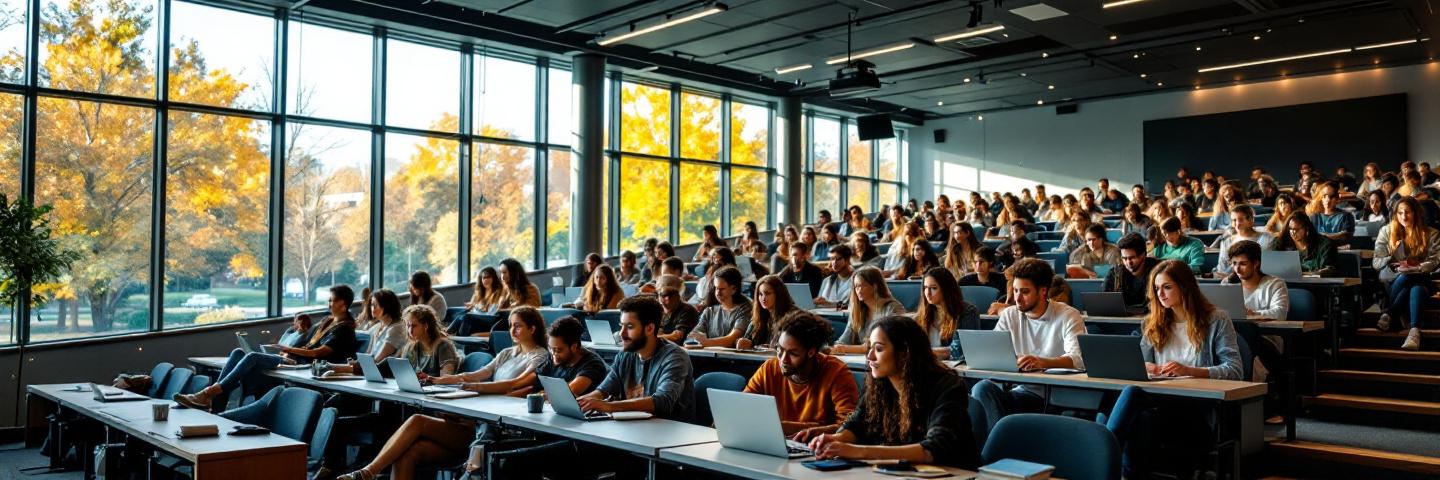
A typical academic year includes lectures, seminars, and group projects. Students engage with diverse classmates and professors to discuss global education challenges. Practical experiences like internships or research projects are often part of the program.
- The year is divided into semesters with a mix of courses and assignments.
- Students participate in seminars to debate education topics and case studies.
- Group projects encourage collaboration and application of theories.
- Internships or volunteer work in educational settings provide hands-on experience.
- Some programs may offer study abroad opportunities to observe education systems firsthand.
Continuing your studies
After this bachelor's degree, students can continue with graduate studies in education, international development, or public policy. Options include master's degrees focusing on education leadership or comparative education.
- Common paths are Master's in Education or International Development.
- Some pursue research-oriented degrees like a Master's in Social Sciences.
- Graduate studies deepen knowledge and improve career prospects.
- Students may also choose to specialize in areas like education technology or policy analysis.
Where to study this degree (31)








Liste des 31 établissements
- San Jose State UniversitySan Jose
- Bethel UniversitySaint Paul
- Northeastern UniversityBoston
- Teachers College at Columbia UniversityNew York
- George Washington UniversityWashington
- New York UniversityNew York
- Arizona State University Digital ImmersionScottsdale
- Duke UniversityDurham
- Loyola University ChicagoChicago
- Boston CollegeBoston
- SIT Graduate InstituteBrattleboro
- American UniversityWashington
- Indiana University BloomingtonBloomington
- Sam Houston State UniversityHuntsville
- Faith Evangelical College & SeminaryTacoma
- Florida International UniversityMiami
- Kent State University at KentKent
- Jacksonville UniversityJacksonville
- University at AlbanyAlbany
- Lehigh UniversityBethlehem
- Avila UniversityKansas City
- University of KentuckyLexington
- Oklahoma State University-Main CampusStillwater
- Endicott CollegeBeverly
- Vanderbilt UniversityNashville
- Harvard UniversityCambridge
- College of New JerseyEwing
- University of Nevada, Las VegasLas Vegas
- Niagara UniversityNiagara University
- Georgia State UniversityAtlanta
- Anderson University - IndianaAnderson
Frequently asked questions
What kind of jobs can I get with this degree?
Graduates often work in education policy, research, or international organizations. They may become program coordinators, analysts, or consultants focused on education issues.
Is prior knowledge of education required to apply?
No specific prior knowledge is required. The program starts with foundational courses suitable for students new to education studies.
Can I study abroad during the program?
Some universities offer study abroad options or international internships to observe different education systems firsthand.
Are internships mandatory in this degree?
Internships or practical projects are often encouraged or included to provide real-world experience but may not be compulsory at all institutions.
Is this degree suitable for someone interested in teaching?
This degree focuses more on education systems and policy than classroom teaching, so it may not prepare you directly for a teaching career.
What skills will I develop during the program?
You will develop skills in research, critical analysis, communication, and understanding of global education challenges.
Can I continue my studies after this bachelor's degree?
Yes, many graduates pursue master's degrees in education, international development, or public policy to specialize further.
Is the program competitive to get into?
Admission is selective, with universities considering academic records, test scores, and personal motivation.
