
Bachelor's Degree in Electrical/Electronics Maintenance and Repair Technologies/Technicians
This bachelor's degree trains students in maintaining and repairing electrical and electronic systems, preparing them for technical roles in various industries.
About
This bachelor's degree in Electrical/Electronics Maintenance and Repair Technologies is designed for students interested in understanding and fixing electrical and electronic equipment. It suits those who enjoy hands-on technical work and problem-solving. The program lasts four years and leads to a bachelor's level qualification recognized in the United States. Graduates can work as technicians in industries that rely on electrical systems, such as manufacturing, utilities, or transportation.
- The degree focuses on the maintenance and repair of electrical and electronic devices used in many sectors.
- It is intended for students who have completed high school and want practical skills combined with technical knowledge.
- Graduates often find roles as maintenance technicians or electronic repair specialists.
- The program balances theoretical learning with practical experience to prepare students for real-world tasks.
- It offers a foundation for those considering further education or specialized certifications in related fields.
What you study
The curriculum covers a range of topics related to electrical and electronic systems, starting with basics and advancing to complex maintenance techniques. Over the four years, students progress from foundational courses to specialized subjects and practical applications. Hands-on work is a significant part of the program, often involving labs, workshops, and projects.
- Early years include courses in electrical circuits, electronics fundamentals, and safety procedures.
- Later years focus on troubleshooting, system diagnostics, and repair techniques for various equipment.
- Students learn to read technical diagrams, use diagnostic tools, and understand control systems.
- Practical sessions simulate real maintenance tasks to build technical skills and confidence.
- The program may include training on programmable logic controllers (PLCs) and industrial electronics.
- Team projects and problem-solving exercises help develop collaboration and analytical abilities.
How to get in
Admission to this bachelor's degree typically requires a high school diploma or equivalent. The process involves applying through the college or university's admissions office, often using the Common Application or individual institutional applications. Students should demonstrate an interest in technical subjects and basic math and science skills.
- Applicants usually need a high school diploma with courses in math and science.
- Some institutions may require placement tests or interviews to assess readiness.
- Strong motivation for technical work and problem-solving is valued.
- Applications include transcripts, recommendation letters, and sometimes personal statements.
- There are no strict quotas, but meeting prerequisites is important for success.
Day to day
A typical year combines classroom learning with practical activities. Students spend time in lectures, labs, and workshops, where they practice maintenance and repair tasks. Internships or cooperative education opportunities may be part of the program, allowing real-world experience.
- The academic calendar includes semesters with courses and lab sessions.
- Students often work on projects that simulate real maintenance challenges.
- Some programs encourage or require internships in companies related to electrical maintenance.
- Time management is important to balance theory and hands-on work.
- Collaboration with peers is common during practical assignments.
Careers this degree leads to
Graduates can find employment as technicians in various industries that rely on electrical and electronic systems. The demand for skilled maintenance professionals is steady, with opportunities in manufacturing, utilities, transportation, and service companies. Entry into the workforce is generally smooth for those with practical skills and certifications.
- Common job titles include maintenance technician, electronics repair technician, and field service technician.
- Industries such as manufacturing plants, power companies, and transportation firms recruit these graduates.
- Work often involves diagnosing equipment issues and performing repairs to minimize downtime.
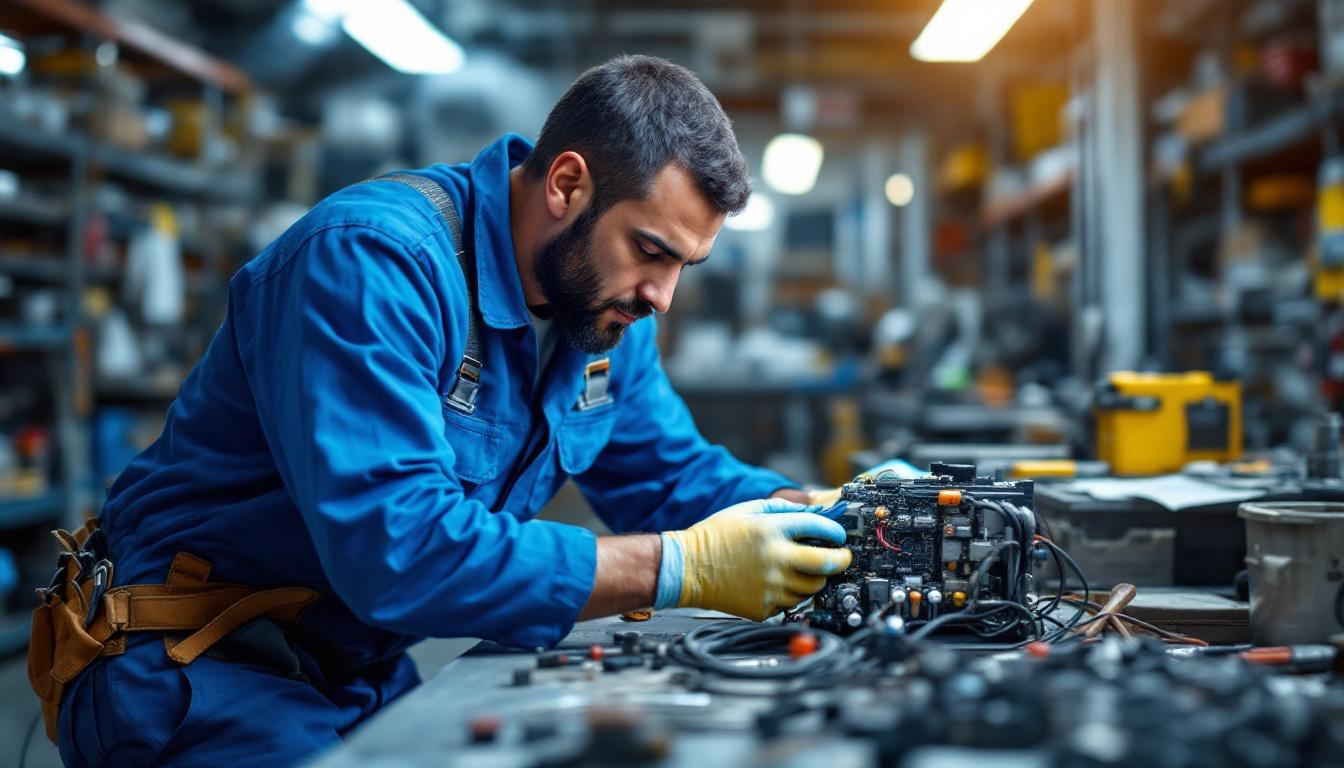
- Technicians may work indoors in workshops or on-site in industrial environments.
- Ongoing learning and certifications can improve job prospects and career advancement.





Continuing your studies
After completing the bachelor's degree, students may choose to continue their education to specialize further or move into management roles. Options include master's degrees in engineering technology or related fields. Some may also pursue certifications in specific technologies or industrial areas.
- Graduate studies can focus on advanced electrical engineering or industrial maintenance.
- Professional certifications enhance technical skills and employability.
- Some graduates may shift toward supervisory or technical sales roles with additional training.
Where to study this degree (6)





Liste des 6 établissements
Frequently asked questions
What kind of practical experience will I get during the degree?
The program includes many hands-on labs and workshops where you practice maintaining and repairing electrical and electronic systems. Some programs also offer internships to gain real-world experience.
Do I need prior technical knowledge to apply?
Basic knowledge in math and science from high school is helpful. The program starts with foundational courses, so prior technical experience is not always required.
Can I work while studying this degree?
Balancing work and study can be challenging due to the practical and theoretical workload. Some students manage part-time jobs, but time management is important.
What types of companies hire graduates?
Graduates find jobs in manufacturing plants, energy companies, transportation firms, and service providers that maintain electrical and electronic equipment.
Is this degree recognized across the United States?
Yes, the bachelor's degree is recognized nationally and prepares you for technical roles in various industries across the country.
Are there opportunities to specialize further after this degree?
Yes, you can pursue master's degrees or professional certifications to specialize in areas like industrial maintenance, electronics, or technical management.
What skills are most important to succeed in this field?
Strong problem-solving abilities, attention to detail, manual dexterity, and good understanding of electrical systems are key to success.
Does the program include safety training?
Yes, safety procedures and regulations are an important part of the curriculum to ensure you can work safely in industrial environments.